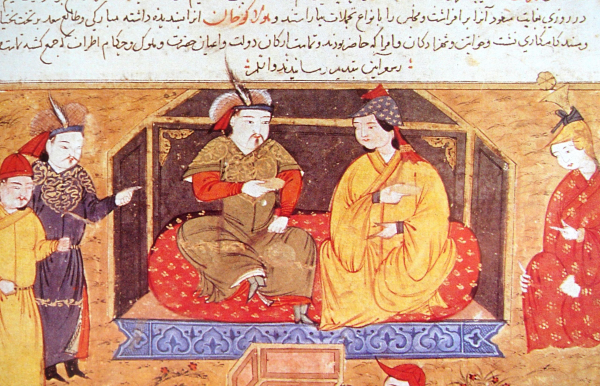
As the modern age dawned in Iran at the end of the Qajar period, women’s education emerged as a central issue, despite heavy resistance from many quarters—ranging from institutions and religious authorities to families themselves. Nevertheless, a determined group of women (and men) pursued the advancement of Iranian society by publishing their criticisms in journals and establishing women’s schools during the twilight of the Qajar era. Join Elaheh Soleimannezhad as she examines this pivotal topic in understanding Iran’s transitional era from the Qajar dynasty to the early Pahlavi period.
The Unsung Hero in the Decipherment of Linear B: Alice Kober (1906-1950)
When Michael Ventris deciphered Linear B, he sent shockwaves through the academic world by proving that it was the script of a Bronze Age Greek dialect. However, Ventris’ discovery was not a one-man effort. In fact, he built upon the work of another brilliant researcher who contributed significantly to the understanding of Linear B: Alice Kober.
Highlighting the Theological Shift after the Rise of Islam: The Example of Theodore Abū Qūrrah
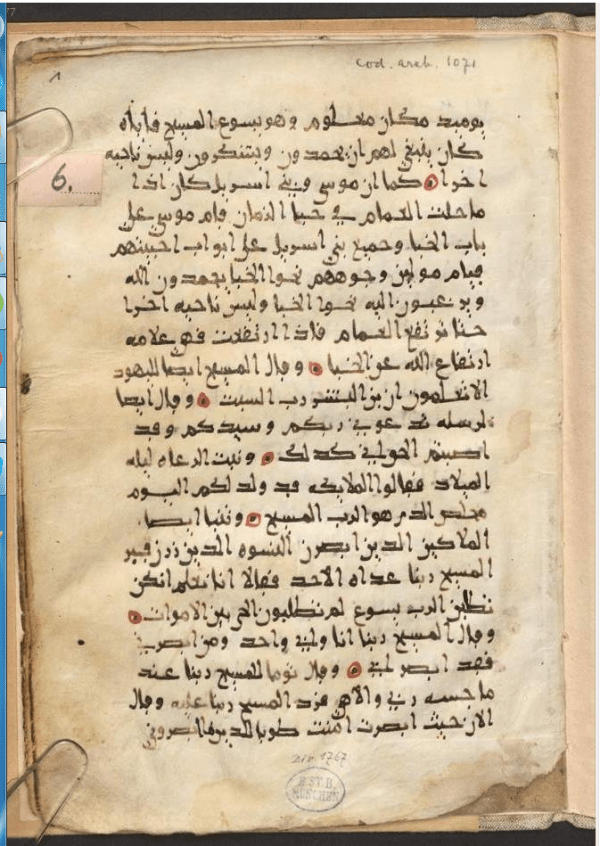
As Middle Eastern Christianity became increasingly integrated into the Arabic-speaking Islamic world, Christian communities faced growing challenges in maintaining their religious practices, as traditional Christian languages declined and Arabic emerged as the primary vernacular. In response, figures such as Theodore Abū Qūrrah produced a substantial body of theological writings in Arabic, both for the spiritual edification of Middle Eastern Christians and to engage with critiques of Christian doctrine from Muslim and other interlocutors. Yohanna Musleh provides an analysis of the significance of this Arabic-speaking theologian, highlighting how he served as a vital bridge between contemporary Middle Eastern Christian communities and their ancient religious heritage.
The Beauty and Value of Eastern Bilingual Manuscripts of the Bible
Christianity, which originated in the Middle East, has remained deeply rooted among its diverse communities to this day, despite the rise and dominance of Islam. This enduring presence is reflected in the astonishingly beautiful traces preserved in surviving medieval bilingual Bible manuscripts, which Maxime Maleux explores in his latest contribution.
Carpet Weaving Under the Ottomans: From Nomadic Tribes to Courtly Grandeur
In her latest piece, Bakhtawar Jamil explores the origins, development, and splendour of Ottoman carpet weaving, which attracted not only audiences from across the Islamic world, but also from Europe.
Tracing Medieval Genoese Heritage in Modern Istanbul: The Case of The Arap Mosque
Join Cemre Melis Yordamlı as she traces the last vestiges of the once vibrant Genoese presence in Istanbul.
Stories on the Road of Silk: Persian Tales in India’s Narrative Imagination
This essay explores the journey of Persian tales across the Silk Roads and their transformation within India’s literary and cultural imagination. Opening with the story of Hatim Tai, the generous Arab hero whose legend found profound resonance in Indian ethical frameworks, the essay traces how narratives traveled alongside merchants, mystics, and migrants, becoming deeply embedded in subcontinental storytelling traditions.
Dogs and Humans in the Phoenician World
In this piece, Dr. Minunno explores the status of dogs in the Phoenician world, ranging from assumptions about their use as a substitute for a good meal to their revered reputation as faithful companions.
The First Armenian Republic (1918-1920): Main Stages in the Formation and Development of Modern Armenian Statehood
"Despite military threats and external aggression, the ultimate downfall came from within." In this article, Professor Ashot Nersisyan chronicles the history of the First Armenian Republic, from its inception in 1918 to its downfall in 1920.
Galatian: The Forgotten Language of Anatolia
Anatolia is home to multiple obscure and lesser known languages. One of them is Galatian: a language spoken in central Anatolia between the 3rd century BCE and the 1st century CE by the Celts who migrated from Europe. This article will focus mainly on the linguistic aspects of Galatian.