
The best-known classical writer to deal with the Persian Wars is without a shadow of a doubt the historiographer Herodotos of Halikarnassos, who wrote his Histories during the second half of the 5th century BCE. Up until this day, some scholars believe that Herodotos conceived the Persian Wars as a clash of civilisations, a war between cultures with opposing values.1 Professor Rosalind Thomas of Oxford University claims that Herodotos “saw the deep-seated causes [of the Persian Wars] in cultural antagonism of Greek and non-Greek.”2 Herodotos seems to have convinced much of his modern readership that Western civilisation, defined by democracy and liberty, which was “on the verge of extinction,” was saved during those fateful early decades of the 5th century BCE.3 This idea penetrated deep into Western popular media, which presented the Persian Wars as the defining moment in Western history, with a tinge of condescension toward the Persians never far away. To name one glaring example: the 2006 Zack Snyder movie 300, whose derogatory portrayal of Xerxes and the Persians sparked outrage in Iran.4
“Herodotos has sometimes even been coined ‘The Father of Lies.'”
Furthermore, in his influential work, François Hartog argued that Herodotos was never genuinely interested in other peoples and cultures, such as the Persians, but instead described them with the sole purpose of defining his own Greek identity.5 He wanted to tell his audience what it means to be Greek by describing its opposite. His work was thus seen by Hartog as a prime example of “Othering,” which the Oxford Dictionary defines as a “process whereby individuals and groups are treated and marked as different and inferior from the dominant social group.” Edward Said popularised this term in cultural studies with his groundbreaking Orientalism, demonstrating how the West’s derogatory description of the East was nothing more than a figment of their imagination and tells us more about Western self-perception than about “Eastern” history and culture. For these reasons, Herodotos has sometimes even been coined “The Father of Lies.”6 This article wishes to re-evaluate this view about Herodotos and find out his actual views on the Persians.

“Herodotos displayed a certain notion of interculturalism and the complications surrounding the idea of the “pureness” of culture.”
First, when using the word “barbarian,” Herodotos refers to all people who converse in a different tongue.7 Although he uses the opposition barbarian–Greek for practical purposes, the historiographer does seem to challenge this clear-cut opposition at times. Herodotos displayed a certain notion of interculturalism and the complications surrounding the idea of the “pureness” of culture.8 The possible hybridity of culture is, for example, demonstrated by the presence of Greek pederasty among the Persians.9 In book seven, Herodotos identifies the Persian-speaking Sagartians as Persian, but whose attire blends Persian with Pactyan culture.10 Herodotos went so far as to inform his contemporaries that the Greek alphabet actually came from the Phoenicians through Kadmos.11 The historiographer even claimed that much of Greek religion hailed from Egypt: “διότι μὲν γὰρ ἐκ τῶν βαρβάρων ἥκει, πυνθανόμενος οὕτω εὑρίσκω ἐόν: δοκέω δ᾽ ὦν μάλιστα ἀπ᾽ Αἰγύπτου ἀπῖχθαι.” (“That they come from the barbarians, upon investigation I found it to be thus, and also that they most certainly hail from Egypt.”)12
Herodotos also didn’t believe in the superior–inferior distinction between the Greeks and the Persians.13 He was convinced that the Persians could be as magnanimous, noble, brave, and honourable as Greeks. This conviction becomes clear from the outset through his famed introduction, in which he gives his main reasons for writing his Histories:
“ὡς μήτε τὰ γενόμενα ἐξ ἀνθρώπων τῷ χρόνῳ ἐξίτηλα γένηται, μήτε ἔργα μεγάλα τε καὶ θωμαστά, τὰ μὲν Ἕλλησι τὰ δὲ βαρβάροισι ἀποδεχθέντα, ἀκλεᾶ γένηται, τά τε ἄλλα καὶ δι᾽ ἣν αἰτίην ἐπολέμησαν ἀλλήλοισι.”
(“to the end that neither the deeds of men may be forgotten by lapse of time, nor the works great and marvellous, which have been produced some by Hellenes and some by Barbarians, may lose their renown”)14
In other words, he writes his books not only to commemorate the great deeds of the Greeks but also those of the barbarians. When he describes the Immortals, the elite infantry of the Great King, he does so with reverence.15 Also, the story of Boges is revealing in this regard. Boges was the governor of Eion who preferred to commit suicide after a failed siege than to appear before his king again after such a shameful display and risk being coined a coward.16 One could argue that such bravery arises out of fear, which undermines its sincerity. Stewart Flory contends, however, that Herodotos rather wishes to show that bravery is also possible within the Persian system. Just like the Greeks are prepared to die for their laws (nomos), so are the Persians prepared to give their lives for the king, who is the embodiment of their nomos.17 Furthermore, Herodotos records instances in which the Persians show admirable behaviour in peacetime. Book six describes, for example, how the Achaemenids treated the Ionian cities favourably and with respect, even restoring democracy in some.18 Likewise in Herodotos, the Greeks are as much capable of acting disgracefully and with vice as are the barbarians.19
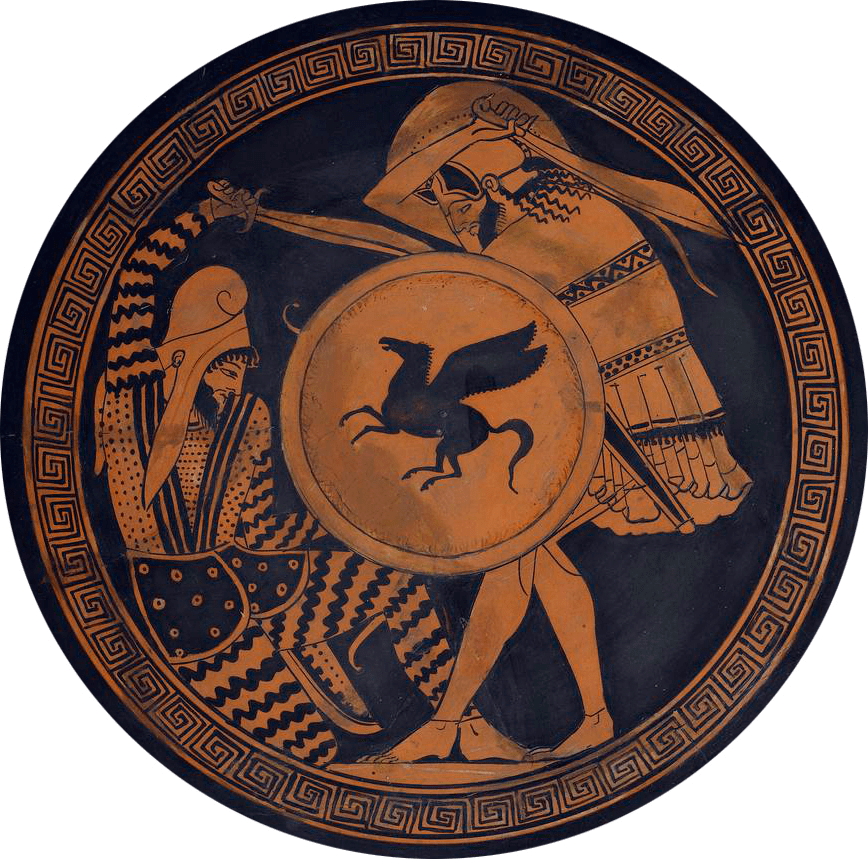
Herodotos also provides a touch of relativisation to the conceptualisation of the Achaemenid monarchy as an evil despotism. He, for example, suggests that Xerxes might have repented his flogging of the Hellespont, putting his hubris into perspective.20 Later on, the author refutes a story about Xerxes in which the king ordered his men to throw themselves overboard during a storm to lighten the load of the ship.21
Turning to the question of eastern slavishness, the traditionally held view that Herodotos saw the Persians as naturally inclined to embrace despotism needs some adjustment.22 The idea has often been put forward that Herodotos saw the Persian Wars as a defence of Western freedom against the inherent slavishness of the “Orientals” (cfr. supra). Central in this discussion is the debate between Xerxes and the exiled Spartan king Demaratos.23 The idea indeed here prevails of the Persian Wars as a battle of liberty against slavery. Demaratos claims that the Greeks will eventually come out victorious because their freedom is on the line. However, Demaratos refers here to the collective freedom of the Greeks against foreign occupation instead of any spiritual idea of individual freedom and democracy. From this viewpoint, subjugation by the Persians would be no different than being conquered by another city-state. 24Furthermore, when asked about their choice to side with the other Greeks, the Athenians gave revenge and their Hellenic identity as their prime reasons, not the defence of the idea of freedom and democracy. 25 Perhaps the most illuminating passage in this regard is that of the Greek embassy to Gelon, the tyrant of Syracuse.26 Collective freedom of Hellas is given as a reason to invoke his help, not the idea of freedom itself, hence the eagerness to solicit support from a tyrant, a figure who stood in sharp contrast to the ideas of freedom and democracy.
Another central argument in the refutation of the idea of inherent slavishness and susceptibility to despotism in Herodotos is the so-called Constitutional Debate.27 After the death of the mad King Cambyses II (historically in 522 BCE), the Persians discussed under which form of government they should carry on. Arguments are given for democracy, oligarchy, and monarchy. One interesting counterargument against the current Persian form of government was its susceptibility to hubris, showing the Persians’ awareness of the downsides of autocracy. In the end, monarchy is voted for, based on the Persians’ indebtedness to this government system for their rise to power. It was under mighty kings that the Achaemenids ended up in control of the Middle East and Central Asia, and they believed that monarchy would continue to serve in the Persians’ best interests. The passage, in any case, proves that Herodotos conceived the Persians as capable of conceiving, understanding, and discussing alternatives to monarchy – just like the Greeks were. In book six, we even see the Persians ousting tyrants from Ionian poleis to restore democracy.28 This puts the supposedly inherent despotism of the Persian people again into perspective. In short, the Persian monarchy was circumstantial instead of inherent, and the Constitutional Debate demonstrates that it was possible for the Persian constitution to have taken a more democratic course.
“he showed a relatively deep notion of the complications and even contradictions that might arise with such a dichotomous distinction between cultures.”
In the end, Herodotos did consider the Greeks and non-Greeks as two distinct groups, but he showed a relatively deep notion of the complications and even contradictions that might arise with such a dichotomous distinction between cultures. Although probably proud of his Hellenic identity, the historiographer never displayed a blatant superiority complex. On the contrary, he believed that Persians were equally susceptible to bravery and vice as the Greeks were, something a true racist writer wouldn’t care to admit. Indeed, already in antiquity he was remembered for his favourable attitude toward non-Greeks, with Ploutarchos calling Herodotos a barbarophile (φιλοβάρβαρος).29 As Eugenia Kiesling adequately put it: “(Herodotos) presents the Persian Wars not as a clash of arms but as a confrontation between two distinct and equally interesting cultures.”
Olivier Goossens
- The Clash of Civilizations theory was first formulated by American political scientist Samuel P. Huntington in the 72.3 edition (1993) of Foreign Affairs; this take on Herodotos: Pagden 2008; Kiesling 2003, 97. ↩︎
- Thomas 2007. ↩︎
- Hanson 2002, 43. ↩︎
- “Iran Outraged by Hollywood War Epic”, Middle East Times, 13 March 2007, consulted through https://web.archive.org/web/20070926231125/http://www.metimes.com/storyview.php?StoryID=20070313-083328-5668r on 14 July 2025. ↩︎
- Hartog 1988. ↩︎
- Burn 1972. ↩︎
- A definition of barbarian clearly formulated in Herodotos 2.158. ↩︎
- Vlassopoulos 2013, 29-ff. ↩︎
- Herodotos 1.171, 135. ↩︎
- 7.85. ↩︎
- 5.58. ↩︎
- 2.50. ↩︎
- Isaac 2004, 259. ↩︎
- Transl. G.C. Macauley. ↩︎
- Herodotos 7.83. ↩︎
- 7.107. ↩︎
- Flory 1978, 418. ↩︎
- 6.42-43. ↩︎
- Isaac 2004, 263. ↩︎
- Ibidem 7.54. ↩︎
- Ibidem, 8.118-119. ↩︎
- Hunt 1998, 48-ff. ↩︎
- Herodotos 7.101-105. ↩︎
- Isaac 2004, 269. ↩︎
- Herodotos 8.144. ↩︎
- Isaac 2004, 270; Herodotos 7.157. ↩︎
- Herodotos 3.80-83. ↩︎
- 6.43. ↩︎
- Ploutarchos De Malignitate Herodoti 12.857a-18.858e. ↩︎
Bibliography
- Burn, A., Herodotus: The Histories, 1972, Baltimore.
- Flory, S., “Arion’s Leap: Brave Gestures in Herodotus”, The American Journal of Philology, Vol. 99, 1978, pp. 411-421.
- Hanson, V., Carnage and Culture: Landmark Battles in the Rise of Western Power, 2002, New York.
- Hartog, F., The Mirror of Herodotus: The Representation of the Other in the Writing of History, 1988, Berkeley.
- Huntington, S., “Clash of Civilizations?”, Foreign Affairs, Vol. 72.3, 1993, pp. 22-49.
- Hunt, P., Slaves, Warfare, and Ideology in the Greek Historians, 1998, Cambridge.
- Isaac, B., The Invention of Racism in Classical Antiquity, 2004, Princeton.
- Kiesling, E., “The Oldest ‘New’ Military Historians: Herodotos, W.G. Forrest, and the Historiography of War”, Herodotus and his World: Essays from a Conference in Memory of George Forrest, eds. P. Derow & R. Parker, 2003, Oxford, pp. 88-100.
- Pagden, A., Worlds at War: The 2,500-Year Struggle between East and West, 2008, New York.
- Thomas, R., “Introduction”, Landmark Herodotus: The Histories, ed. R. Strassler, 2007, New York, pp. ix-xxxvi.
- Vlassopoulos, K., Greeks and Barbarians, 2013, Cambridge.
 alongthesilkroad.com
Leave a comment