The Qazvin School of Persian Painting: Artistic Innovation, Court Patronage, and Its Legacy in Safavid Art

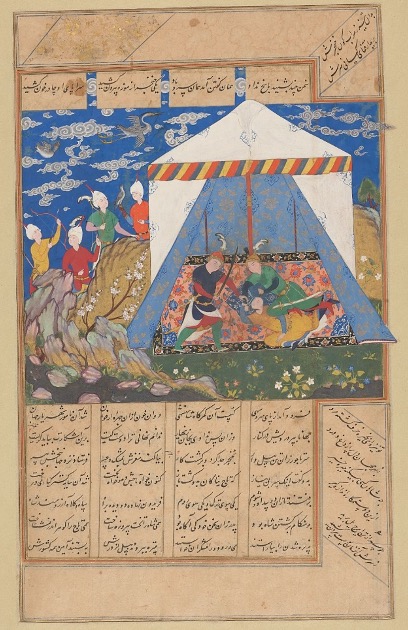
The Qazvin school of painting marked a key transitional phase in Safavid art, bridging the court style of Tabriz and the individualistic painting of seventeenth-century Isfahan. Emerging after Shah Tahmasp I moved the Safavid capital to Qazvin in the mid-sixteenth century, it blended the traditions of Herat and Tabriz with new stylistic features, including elongated figures, lyrical compositions, refined colour harmonies, monumental wall paintings, and single-page works. The period also produced significant royal manuscripts, such as the Shahnameh of Shah Isma'il II, and nurtured artists who shaped the later Isfahan school, leaving a lasting legacy in Persian painting.

A Princess Destined to Become a Queen in an Unknown Land: Beltum of Qatna (18th Century BCE)

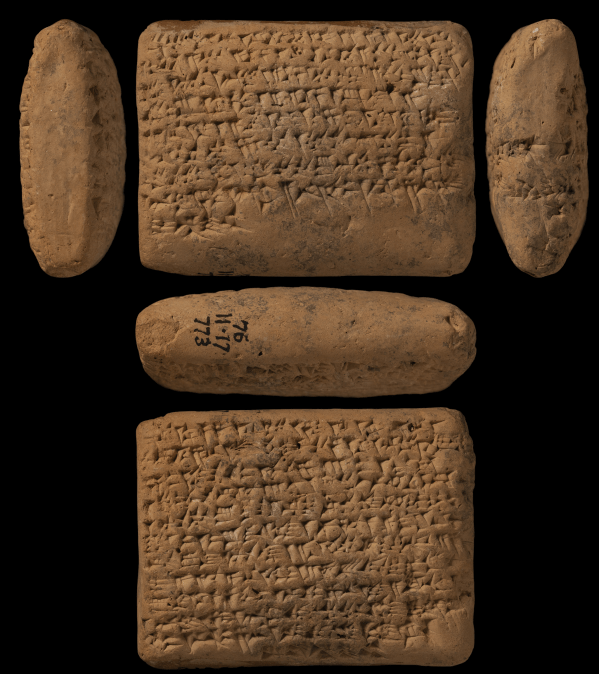
During the early 18th century BCE, the Ancient Near East was a constant battleground between various warlords and kings who wanted to extend their influence over their neighbouring countries. However, besides hostility, there was also room for friendship. One could not take on the whole world, and alliances were therefore crucial in cementing one's place in the complex patchwork of kingdoms and city-states. In an age of kings, dynastic marriages were the most common and efficient way to establish friendship between two royal houses. For the Old Babylonian period, such political unions are nowhere so vividly attested as in the city of Mari. Hundreds of letters shed light on the complex process and consequences of arranging a political marriage. This article wishes to address this topic through one concrete example: the union between Princess Beltum and King Yasmaḫ-Adad. The source material not only informs us of the wider political implications of their matrimony but also gives us some rare insights into the personal side of such a marriage.

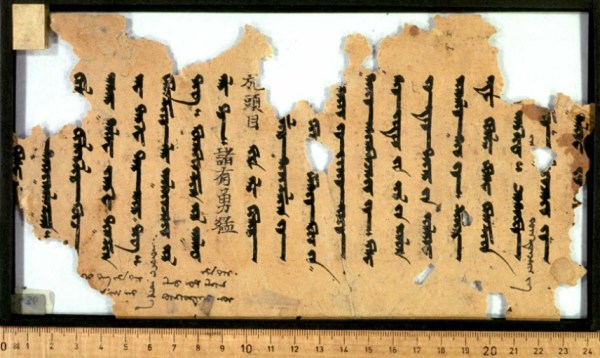
Unveiling Uyghur legacy in Eurasian History II: on the impact of Manicheism and the Sogdian elites on the Uyghur Khaganate (744–840)

In present-day minds, the Uyghur people are associated with Islam. Yet, this is a relatively recent development in their history. It is only after the integration of the Uyghur kingdom of Qocho (ca.840–14th century) into the Chagatai Khanate during the 14th century that they slowly began to convert to Islam. Long before that, in 762/763, the Uyghur kingdom adopted Manicheism as its state religion. But why would a steppe khaganate choose a religion that originated in Mesopotamia? And, why would they adopt a religion that prohibited the consumption of dairy products and meat, which represented a significant part of the steppe diet?

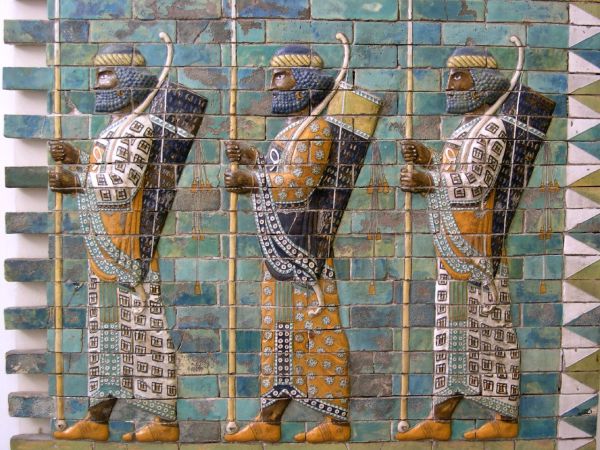
Persepolis: The Jewel of the Great Kings

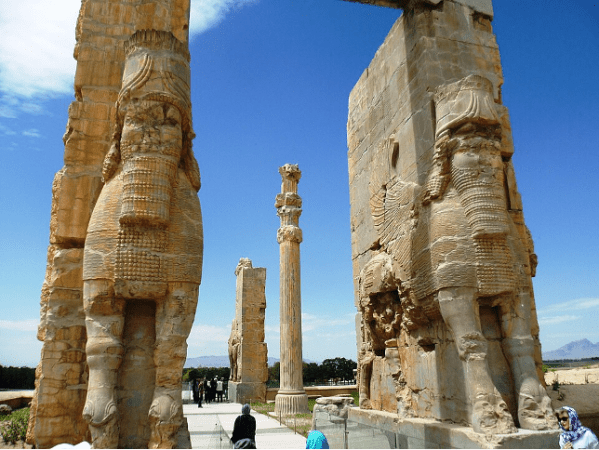
This article will explore how the Great Kings imbued every facet of the architectural marvel that is Persepolis with symbolism. From the art adorning its walls to its place within the royal calendar, we shall see how the capital became arguably the greatest symbol of Achaemenid ideology. Finally, we shall observe how its destruction at the hands of Alexander of Macedon has unintentionally turned the site into a symbol of historical preservation for modern historians.

When Kings Took from the Gods: Temple Plunder and Power in the Seleucid Empire 

One night, somewhere in the uplands of southwestern Iran, a king came looking for treasure. The target was a temple; ancient, wealthy, and deeply embedded in the life of the surrounding community. Inside, it was said, lay stores of silver and gold accumulated over generations. For a ruler under pressure, it must have seemed like a solution waiting to be claimed. But the king never left alive. This episode, associated with Antiochus III the Great (r. 223-187 BCE), is more than a dramatic anecdote, it captures, in a single moment, a tension that ran through the Seleucid Empire: the uneasy relationship between royal power and sacred wealth.

Having a Cold One in Babylon: Beer in Neo-Babylonian and Achaemenid Mesopotamia 

Beer has been part of our diet quite literally since the dawn of history. As soon as writing was invented in the land of the Tigris and Euphrates, our sources testify to the widespread production and distribution of this alcoholic beverage. Breweries continued to operate throughout the entire length of Ancient Mesopotamia’s rich and long history. Initially barley-based, dates became the central component in crafting beer at the turn of the first millennium BCE. This article wishes to shed some light on the beer, beer culture, and beer enterprises of Babylonia, with particular attention to the 1st millennium BCE, drawing on the rich source material left by the various Neo-Babylonian and Achaemenid archives from Ancient Iraq.

Unveiling Uyghur Legacy in Eurasian History I: Intermediaries and Administrators of the Mongol Empire 

The Uyghurs were particularly successful within the Mongol Empire because they recognized its hybrid nature as an opportunity to thrive, making themselves indispensable in the process. They were entrusted with roles as translators, administrators, merchants, scribes, and physicians. The history of Uyghur–Mongol relations demonstrates that the Silk Road and Eurasia were shaped not only by imperial powers, but also by local political entities and cultural intermediaries. This article aims to illustrate this through the example of the Uyghurs.

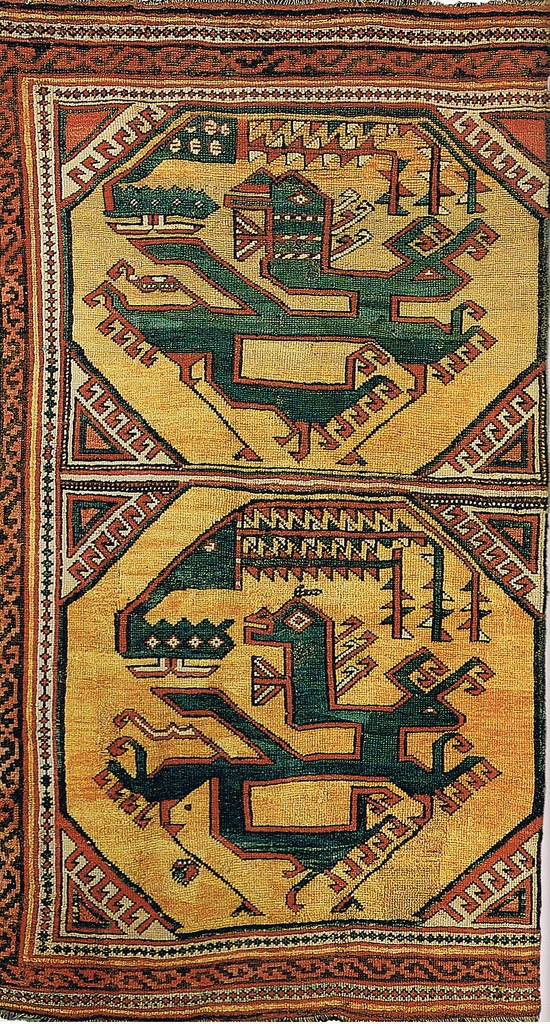
The Origins and Evolution of Armenian Carpet Motifs

Textiles serve as vital historical records, reflecting a long-standing tradition shaped by trade, cultural exchange, and symbolic meaning, in which global motifs such as the Dragon and Phoenix were adapted into a distinctive local artistic heritage. This article aims to demonstrate this through the example of the Armenian Dragon and Phoenix carpet tradition.

May It Nourish Your Soul: Feasting at the Court of the Sasanian King of Kings

The Sasanian Empire, the last native Persian dynasty to rule Iran before the Arab conquest, was a juggernaut of the ancient world. At its height, its realm stretched from Central Asia in the east to the Sea of Marmara in the west, and its armies proved a match for Rome’s mighty legions time and time again. The empire was also a cultural titan,its reign marking a golden age in Iranian civilization and witnessing a flourishing of art, architecture, and learning. And one of the ways that the Sasanians displayed this flourishing culture, just as previous Iranian dynasties did before them, was through food.

The Hand of ‘Uthmān ibn al-Ḥusayn al-Warrāq al-Ghaznavī: Calligraphic Diversity and Artistic Lineage in TSMK EH.209

The Topkapı Sarayı Müzesi Kütüphanesi in Istanbul preserves a Ghaznavid-era bilingual manuscript, Tafsīr-i munīr (MS. TSMK EH.209), produced in 484 AH / 1091 CE under Sultan Ibrāhīm. It is among the earliest surviving examples of a Qur’anic exegesis combining the Arabic text with a Persian commentary attributed to Abū Naṣr al-Ḥaddādī. Executed by the calligrapher ‘Uthmān ibn al-Ḥusayn al-Warrāq al-Ghaznavī, only its eighth volume survives today. The fate of the remaining volumes—whether lost, dispersed, or destroyed—remains unknown. This study draws in part on direct consultation of the manuscript at the Topkapı Palace Library.

Blog at WordPress.com.

Up ↑