

One night, somewhere in the uplands of southwestern Iran, a king came looking for treasure. The target was a temple; ancient, wealthy, and deeply embedded in the life of the surrounding community. Inside, it was said, lay stores of silver and gold accumulated over generations. For a ruler under pressure, it must have seemed like a solution waiting to be claimed. But the king never left alive. This episode, associated with Antiochus III the Great (r. 223-187 BCE), is more than a dramatic anecdote, it captures, in a single moment, a tension that ran through the Seleucid Empire: the uneasy relationship between royal power and sacred wealth. When kings took from temples, they were not simply solving financial problems; they were testing the limits of their authority and sometimes discovering those limits the hard way.
To understand why temple plunder mattered so much, we need to rethink what a temple was in the ancient world. Temples were not quiet, isolated places reserved only for ritual; they were central institutions. They stored wealth, managed land, employed workers, and served as focal points of local identity. In regions like Mesopotamia, temples could function almost like economic hubs, deeply woven into everyday life. The wealth they held was not incidental; it was the result of centuries of offerings: precious metals, crafted objects, agricultural produce, and revenues from land. This accumulation gave temples a kind of stability that even kings sometimes lacked. But that wealth was not “available” in a simple sense. It belonged to the gods, and, just as importantly, to the communities that maintained and protected those gods. To take from a temple, therefore, was not like collecting taxes. It was an intrusion into a sacred and social system at once.
As far as the Seleucid Empire is concerned, that was vast, stretching from the eastern Mediterranean deep into Asia, governing it required constant movement of armies, officials, and resources. That meant constant expenses. War was the greatest burden of all. Armies had to be paid, supplied, and rewarded. Victories could bring spoils, but defeats could be financially devastating. The Seleucid kings were not strangers to temples. On the contrary, they often supported them, granting privileges, making donations, and participating in rituals. This was part of how they built legitimacy across a diverse empire, but this relationship depended on balance. Kings could benefit from temples, but they were also expected to respect them. When that balance tipped too far, when temples became sources of extraction rather than partners in power, the consequences could be severe. Temple plunder, then, was not a routine policy. It was a risky move, usually tied to moments of pressure. This is where the story tightens.
“The king targeted a temple, the temple of Bel, believed to contain significant wealth … The resources were there; the need was urgent. What he seems to have misjudged was the response.”
In 188 BCE, after defeat by Rome, the Seleucid king Antiochus III was forced to accept the Treaty of Apamea. The terms included a massive indemnity to be paid over several years. This was not a one-off loss; it was a sustained drain on the royal treasury. Suddenly, the king needed large amounts of silver, and he needed it quickly. Temples, with their concentrated wealth, became hard to ignore.
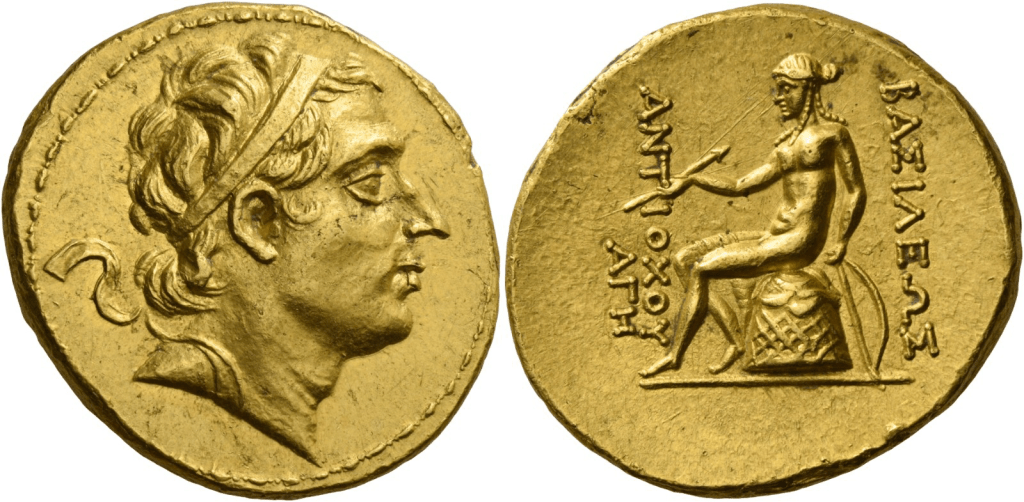
Antiochus III is often remembered as an energetic and capable ruler. He campaigned widely, reasserting Seleucid authority across much of the empire. But his later years were shaped by financial strain, and it is in this context that the Elymais episode takes on its full meaning. The king targeted a temple, the temple of Bel, believed to contain significant wealth. From a purely strategic perspective, the decision is understandable. The resources were there; the need was urgent. What he seems to have misjudged was the response. The temple was not an isolated building. It was part of a living community, defended not only by belief but by shared interest. When the king attempted to seize its wealth, resistance followed swiftly. According to ancient accounts, Antiochus was killed in the ensuing violence. Even if the details have been shaped by later storytelling, the core truth is difficult to miss: this was a moment where royal authority broke against local realities.
“What makes this episode so striking is not just its violence, but its symbolism. A king who had marched armies across continents was stopped, not by a rival empire, but by the defense of a temple!”
If Antiochus III represents a direct and ultimately disastrous approach, his successor, Seleucus IV, seems to have taken a more cautious path. He inherited the same financial burdens, including the ongoing payments imposed by Rome. But instead of personally targeting temples, he appears to have acted through intermediaries. The best-known example comes from Jerusalem. According to later accounts, Seleucus sent an official, Heliodorus, to access funds from the temple treasury. The story, preserved in literary sources, famously describes divine intervention preventing the act. Whether or not we take this literally, the narrative itself is revealing. It presents the attempt as a violation so serious that it invites supernatural punishment. From a historical perspective, what matters is the method. Seleucus did not lead an armed expedition against the Jerusalem temple. He relied on an administrative agent. This suggests awareness. The risks of temple plunder were clear enough that distance seemed preferable. And yet, even this approach was fraught. The need to frame the episode in such dramatic terms indicates how sensitive the issue was. Accessing temple wealth, even indirectly, remained deeply controversial.
With Antiochus IV, the situation becomes even more complex. His reign is closely associated with events in Judea, where internal divisions and external pressures intersected. Competing groups within the region sought royal support, and the king became entangled in local conflicts. In this charged environment, the temple in Jerusalem became a focal point. Ancient sources describe the removal of sacred objects, items that carried not only material value but deep symbolic meaning. This was not just an economic act. It was a visible assertion of control, and it was perceived as a violation. The result was the Maccabean Revolt, a sustained uprising that combined political resistance with religious motivation. Here, temple plunder crossed a threshold. It did not merely strain relations; it helped ignite open rebellion.
But how did Seleucid rulers justify taking from temples? They likely did not present it as “plunder” in the blunt sense. Instead, such actions could be framed as necessary measures, temporary appropriations, or even rightful claims. In some regions, earlier traditions allowed for closer relationships between kings and temples. Rulers could, under certain circumstances, draw on temple resources. Seleucid kings, operating in these landscapes, may have invoked such precedents. But the empire was not uniform. What might be acceptable in one cultural context could be unacceptable in another. A practice that seemed legitimate in Mesopotamia might provoke outrage in Judea or Elymais. This variability made temple plunder particularly dangerous. It required not just authority, but careful judgment, and that judgment did not always succeed.
“temple plunder acts as a kind of stress test; it reveals where royal authority could reach and where it began to fail.”
One of the key insights from these episodes that we saw here is that temple wealth was never just about money. Gold and silver taken from a temple carried meanings far beyond their material value. They represented offerings, traditions, and connections between communities and their gods. To remove them was to disrupt those connections. This is why reactions to temple plunder could be so intense. It was not simply a question of economic loss; it was a question of identity and order. For local communities, temples were not abstract institutions. They were part of daily life. Priests, workers, and worshippers all had a stake in their protection. When royal officials approached a temple treasury, they were entering a contested space. Resistance could take many forms, from negotiation to violence. In Elymais, it was immediate and deadly. In Judea, it became organized rebellion. Elsewhere, it may have been quieter but no less significant: loss of trust, erosion of loyalty, or withdrawal of support. These responses highlight a crucial point: the Seleucid Empire was not simply imposed from above. It was sustained, or undermined, through countless local interactions.
Temple plunder forces us to reconsider what Seleucid kingship looked like in practice. These rulers were powerful, but they were not all-powerful. Their authority depended on maintaining relationships across a vast and diverse empire. They needed the cooperation of local elites, the support of communities, and the legitimacy provided by religious institutions. When they turned against temples, they risked all of that. In this sense, temple plunder acts as a kind of stress test; it reveals where royal authority could reach and where it began to fail.
“Gold and silver taken from a temple carried meanings far beyond their material value. They represented offerings, traditions, and connections between communities and their gods.”
By looking at these three rulers together allows us to see both patterns and contrasts. Antiochus III the Great acted directly and paid with his life. Seleucus IV Philopator acted indirectly, attempting to manage the risks through delegation. And Antiochus IV Epiphanes combined financial extraction with political intervention, triggering large-scale revolt. All three faced similar pressures. All three turned, in different ways, toward temple wealth. But the outcomes varied dramatically, shaped by context, method, and local response. This variability is important. It reminds us that there was no single “Seleucid policy” on temple plunder; only a series of decisions made under constraint.
To conclude, the image of a king entering a temple to seize its wealth is a powerful one. It suggests authority, control, and the ability to command resources at will. But the Seleucid experience tells a different story.When Antiochus III approached a temple in Elymais, he did not leave as a victor. When Seleucus IV sought access to temple funds, the act was remembered as deeply problematic. When Antiochus IV intervened in Jerusalem, the consequences were explosive. In each case, temple plunder exposed the limits of royal power. It showed that even kings had to navigate the boundaries set by belief, tradition, and community, and when those boundaries were crossed, the results could be unpredictable and sometimes irreversible.
In a world of vast empires and ambitious rulers, the gods and the people who served them still had the power to push back.
Eleni Krikona
Further reading
- Abel, F.M., Histoire de la Palestine depuis la conquête d’Alexandre jusqu’à l’invasion arabe, 2 vols, Paris, 1952.
- Aperghis, G.G., The Seleukid Royal Economy: The Finances and Financial Administration of the Seleukid Empire, Cambridge, 2004.
- Bartlett, J.R., The First and Second Books of the Maccabees, Cambridge, 1973.
- Gruen, E.S., The Hellenistic World and the Coming of Rome, Berkeley, 1984.
- Krikona, E., ‘Plunder of Temples by Seleukid Kings. The cases under the reign of Antiochos III, Seleukos IV, and Antiochos IV,’ Journal of Ancient History and Archaeology 4 (1), 19-28, 2017.
- Sherwin-White, S., Kuhrt, A., From Samarkhand to Sardis: A New Approach to the Seleucid Empire, London, 1993.
- Tcherikover, V., Hellenistic Civilization and the Jews, Philadelphia, 1959.
- Will, É., Histoire politique du monde hellénistique (323–30 av. J.-C.), Nancy, 1966–1967.
Eleni Krikona (born 1994) is a postdoctoral researcher at KU Leuven focusing on Roman Republican Constitutionalism. Her research interests lie in constitutional matters, aspects of political identity, and political theory in antiquity. She first studied Pedagogy of Primary Education and then History and Archaeology at the University of Athens. In her master’s in Hamburg, Germany, she specialized both in Ancient History and Classical Archaeology before conducting her PhD research on Classical Athenian Constitutionalism (Aristotle University of Thessaloniki/ University of Edinburgh).
 alongthesilkroad.com
Leave a comment