
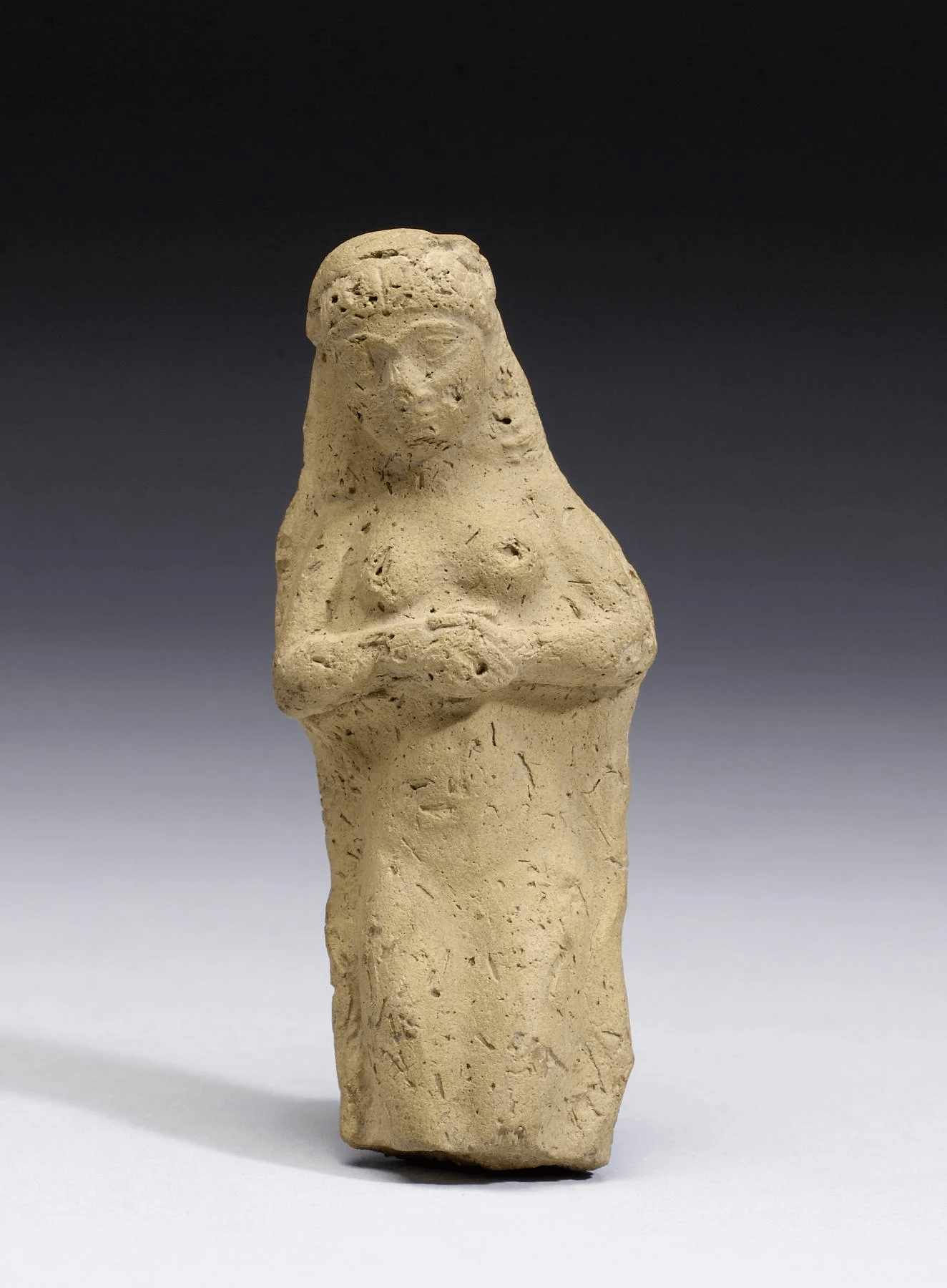
During the early 18th century BCE, the Ancient Near East was a constant battleground between various warlords and kings who wanted to extend their influence over their neighbouring countries. However, besides hostility, there was also room for friendship. One could not take on the whole world, and alliances were therefore crucial in cementing one’s place in the complex patchwork of kingdoms and city-states. In an age of kings, dynastic marriages were the most common and efficient way to establish friendship between two royal houses. For the Old Babylonian period (c. 1894–1595 BCE), such political unions are nowhere so vividly attested as in the city of Mari. Hundreds of letters shed light on the complex process and consequences of arranging a political marriage. This article wishes to address this topic through one concrete example: the union between Princess Beltum and King Yasmaḫ-Adad. The source material not only informs us of the wider political implications of their matrimony but also gives us some rare insights into the personal side of such a marriage.
Dynastic Marriages
Love is considered the fundamental condition for marriage nowadays in Western society. This wasn’t always the case, with wedlock out of practical or strategical considerations being the norm for most of European history. A matrimonial union without emotions also dominated many other cultures in the past, including Ancient Mesopotamia. Although the idea of marriage out of love certainly existed, this seems to have been rather the exception if we are to take the source material at face value. Some even discouraged marrying out of passion: “He married for pleasure. When he thought it over, he divorced (SP 2.124).” Especially among the elite, love seems to have been largely absent when a man and woman formed a new household. Marriages were not personal choices; they were brokered between the family heads. Prime considerations seem to have been gaining access to each other’s resources, networks and – in the case of royal families – political alliances.
Dynastic marriages are well attested in the Ancient Near East during the Old Babylonian period (c. 1894–1595 BCE). They were the most common way to forge new alliances in the complex and fiercely debated patchwork of Near Eastern kingdoms and city-states. We usually see a powerful king giving away his daughter’s hand in marriage to a less significant monarch or crown prince. Consequently, his prestigious daughter was likely to be one of the most influential figures at the foreign court, with her son becoming the most likely candidate to succeed to the throne. This would tie the courts even closer together, as they literally became one single family. Political marriages, however, were by no means a straightforward affair. It was a long and tiring process of negotiations with ambassadors and messengers travelling back and forth. An important part of establishing these marriages was gift exchange. The family of the bridegroom usually gave a large gift to the family of the bride (terḫatum), while the bride also received a dowry from her father (nidittum) to take with her. Additional gifts between the families and interested parties were called biblum. These gifts could consist of jewellery, precious vessels, clothes, leather articles… Dowries on the other hand were often made up of kitchen tools, furniture and female servants to attend to the princess/queen, reflecting the nidittum’s symbolic value for setting up a new household.
The City of Mari during the Late 19th Century BCE and Šamši-Adad’s Kingdom
Nowhere are these dynastic marriages so vividly and extensively attested during the Old Babylonian period as in the city of Mari. Situated at the site of Tell Hariri on the right bank of the Euphrates River some 50 kilometres north of the modern Iraq-Syria border, Mari was one of the most important urban centres of Mesopotamia during the early 2nd millennium BCE. The city had been the subject of constant French excavations since 1933. Ever since, the archaeologists have unearthed thousands upon thousands of tablets detailing the life and history of Mari. What makes these finds so special is the vast number of letters among them, many of which are of a remarkably high narrative quality. These originated in or were directed at the palace, giving us invaluable insights into international relations and diplomacy at the time.
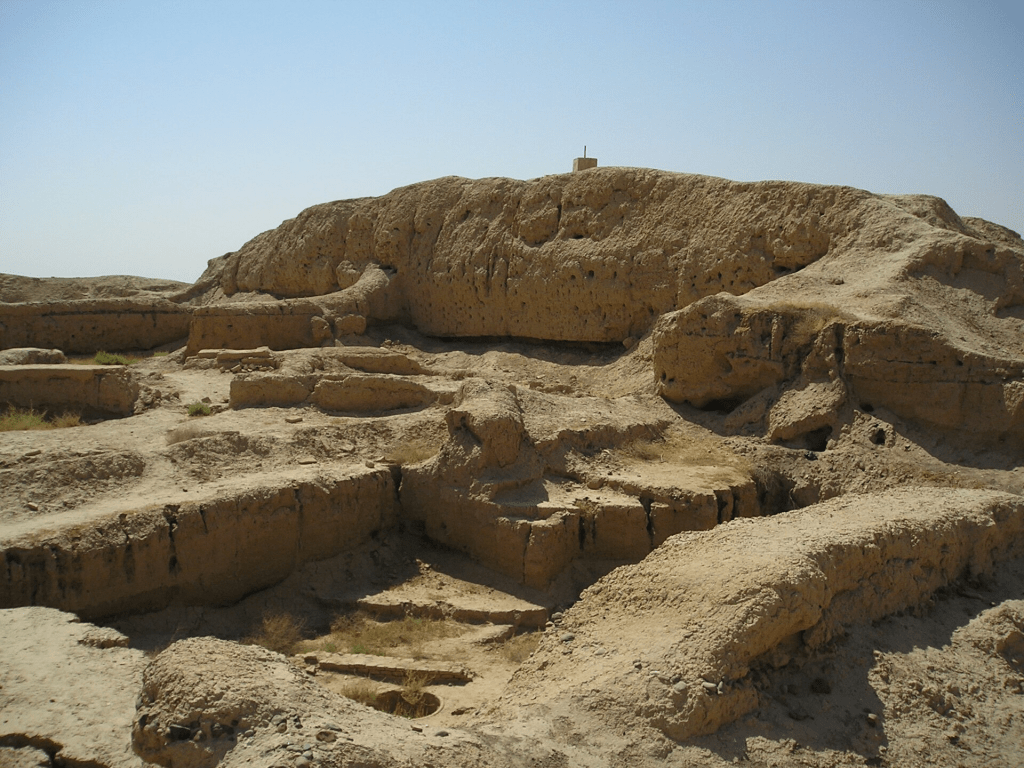
Mari was dominated at the time by the Amorites, a semi-nomadic people with their own Western Semitic language who had engulfed Mesopotamian society during the early 2nd millennium BCE. They started settling among the traditional urban populations and even gained a foothold in the upper classes, eventually securing the throne in several Mesopotamian city-states such as Mari and Babylon. Some of these kings, such as the famed Hammurabi of Babylon (r. c. 1792 – c. 1750 BCE), became extremely successful, launching campaigns of conquest in which they annexed large swathes of Ancient Iraq. He even took far-off Mari in 1761 BCE. This wasn’t the first time, however, the city had to endure the rampaging army of an Amorite warlord, as Šamši-Adad I (r. 1808-1776 BCE) had preceded Hammurabi in conquering the place in 1796 BCE, incorporating the city in his expansive North Mesopotamian empire. It is against the background of Šamši-Adad’s kingdom that our story takes place.
After his conquest of Mari, Šamši-Adad I put his son, Yasmaḫ-Adad, on the throne there, just like he had put his other son, Išme-Dagan, on the throne of Ekallatum. Although a king in his own right, Yasmaḫ-Adad remained subordinate to his father and had to answer to him directly. Their relationship was shaky, to say the least. In one letter, Šamši-Adad complained to his son: “Can you not observe your brother, who leads vast armies? Yet you cannot take charge of your palace and house! (ARM 1 108; trans. J Sasson).” Yasmaḫ-Adad was indeed known to be quite fond of parties and drinking which kept him away from the responsibilities of state governance. Šamši-Adad nevertheless kept his son on Mari’s throne, entrusting him with the vital task of securing the empire’s western borders against the hostile Syrian kingdom of Yamḫad, centred on the capital of Ḫalab, modern-day Aleppo. Following the age-old wisdom of “the enemy of my enemy is my friend”, Šamši-Adad approached Yamḫad’s rival, the kingdom of Qatna which lay to the southwest. Qatna was at that moment ruled by King Isḫi-Adad (died c. 1772 BCE). Luckily for Šamši-Adad, this powerful monarch had a daughter, Beltum, available for marriage. Šamši-Adad therefore entered negotiations to secure a political alliance through the union of his son at Mari with the princess.
Negotiations and Marriage
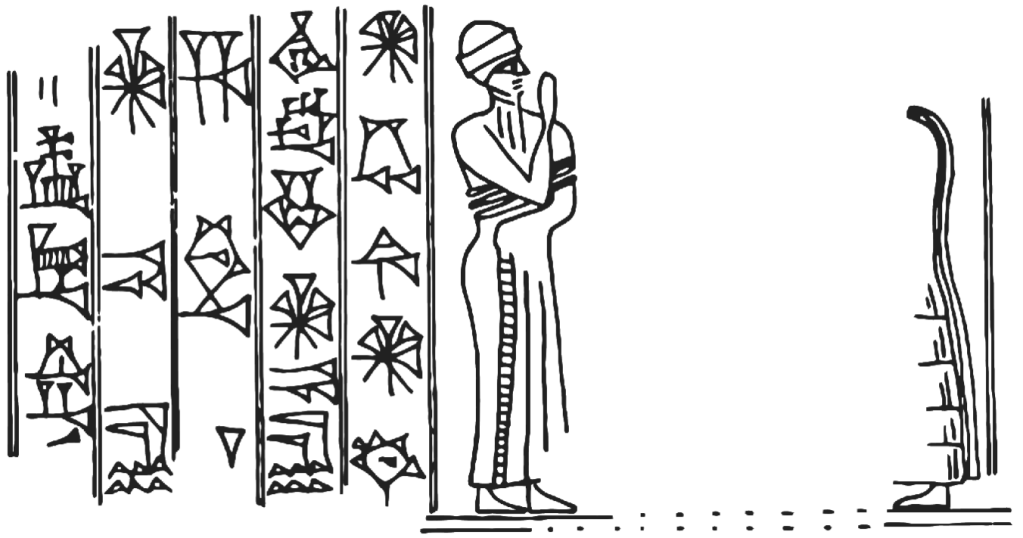
The marriage was an interesting exception to the above rule, as Šamši-Adad and Išḫi-Adad considered each other as equals. Once the marriage was agreed upon, the union reached the vital phase of gift exchange. This was a question of honour, as neither king wanted to make a poor impression on their colleague through modest presents, leading Šamši-Adad to write to his son that “to give a small terḫatum (gift to the bride’s father) would be embarrassing”. Consequently, Yasmaḫ-Adad’s terḫatum consisted of a staggering 4 talents of silver. The bride’s party, on the other hand, met the expectation to give an even more sumptuous donation as part of the princess’s dowry (nidittum): 10 talents of silver and garments worth 5 talents of silver. These garments were certainly a welcome gift as they constituted an important commodity in Mesopotamia’s international trade, being for example a highly prized asset in Anatolia where they were eagerly exchange for silver and gold. Measures were taken to guard these rich gifts along the way, with Šamši-Adad ordering his son to “set protective guards over this silver. (ARM 1 46, trans. J. Sasson)”.
“Whatever you desire, just write me and I will give it to you.” (A.3158, trans. J. Sasson)
Once concluded, a formal alliance emerged between North Mesopotamia and Qatna in which both parties were expected to aid each other whenever needed: “Whatever you desire, just write me and I will give it to you (A.3158, trans. J Sasson.” Cooperation could come in various forms, from sending troops, money, to granting privileges such as allowing shepherds of both kingdoms to graze on each other’s territory: “My sheep and yours should graze together (ARM 5 15, trans. J. Sasson)”.
The alliance didn’t always run smoothly. We see Išḫi-Adad complaining on multiple occasions about the lack of support from his Mesopotamian ally, writing to his son-in-law: “Why is it that whatever I desire from the king (Šamši-Adad), he does not give it? (A.3158, trans. J. Sasson)”. Two years after the marriage, Qatna requested soldiers from Yasmaḫ-Adad, who apparently kept delaying sending military support: “For quite a long time now, I keep on writing about the troops, and (officers for) your troops keep telling me, ‘Yes troops are coming up!’ Yet, there is no coming up of troops. (ARM 2 51, trans. J. Sasson).”
“My sheep and yours should graze together.” (ARM 5 15, trans. J. Sasson)
The marriage between Yasmaḫ-Adad and Beltum also wasn’t exactly a success story. One letter refers to the princess residing outside of the palace of Mari. Šamši-Adad was justifiably worried that Išḫi-Adad might consider this isolation of his daughter from court as an insult: “Upon hearing this, her father will be very irritated (A.2548, trans. J. Sasson).” Yasmaḫ-Adad apparently didn’t appreciate her company enough and his father goes on to demand that appropriate quarters be prepared for Mari’s new queen: “A chamber should be prepared for her and house her there. Do not house her externally (idem)”. This spatial separation between the king and queen of Mari jeopardized the whole alliance, as it was expected that the alliance would be further cemented through the procurement of offspring.
The coldness between the couple isn’t exactly surprising, as the marriage was entirely forced by their parents, with no opportunity for the spouses to get to know each other beforehand. The situation must have been especially distressing for the bride, as she was in a strange and completely new environment. Beltum must have been very homesick indeed. It has even been suggested that she became suicidal. In fact, at one point a palace official informed king Yasmaḫ-Adad that his wife had become seriously ill after suffering a sunstroke. The Syrian sun is indeed notoriously dangerous, especially at noon. Whether she ventured out into the open on purpose seems unlikely, however. At any rate, the queen luckily recovered, with a diviner reporting to the king: “Her illness is not (grave). She will gain her health. My lord should not worry (ARM 26 136, trans. J. Sasson).”
“A chamber should be prepared for her and house her there. Do not house her externally.”
(A.2548, trans. J. Sasson)
The queen was fortunately not entirely alone at Mari. Just like most princesses and queens who were married off, Beltum was allowed to bring her servants from Qatna along, some of whom she would have had a good and long relationship with. Among them was her nanny, whose name unfortunately has been omitted from the records. Beltum knew her since she was a baby and having her around must have been comforting. In the ancient world, the relationship between children and their nannies could indeed be as deep as, if not deeper than, their relationship with their mothers. In Ancient Mesopotamia, elite mothers could be very absent figures, leaving most of the breastfeeding and upbringing to the wetnurse. In any case, not everyone at the palace of Mari felt the same way about Beltum’s nanny. In one letter, the official Uṣur-awassu complained to the king about her ignorance of palace protocol: “She was sent to Mari with Beltum; yet she knows nothing about palace operation (ARM 26 298, trans. J. Sasson).” Uṣur-awassu makes his feelings known about her in the same letter: “Had only this woman … been kept away when Beltum was leaving Qatna (idem).” He even blames the nanny for Beltum’s sunstroke, allowing the queen outside at midday to perform a ceremony at the Ištar temple. Uṣur-awassu therefore advises the king to send highborn matrons to assist the queen and educate her in the ways of the Mari court.
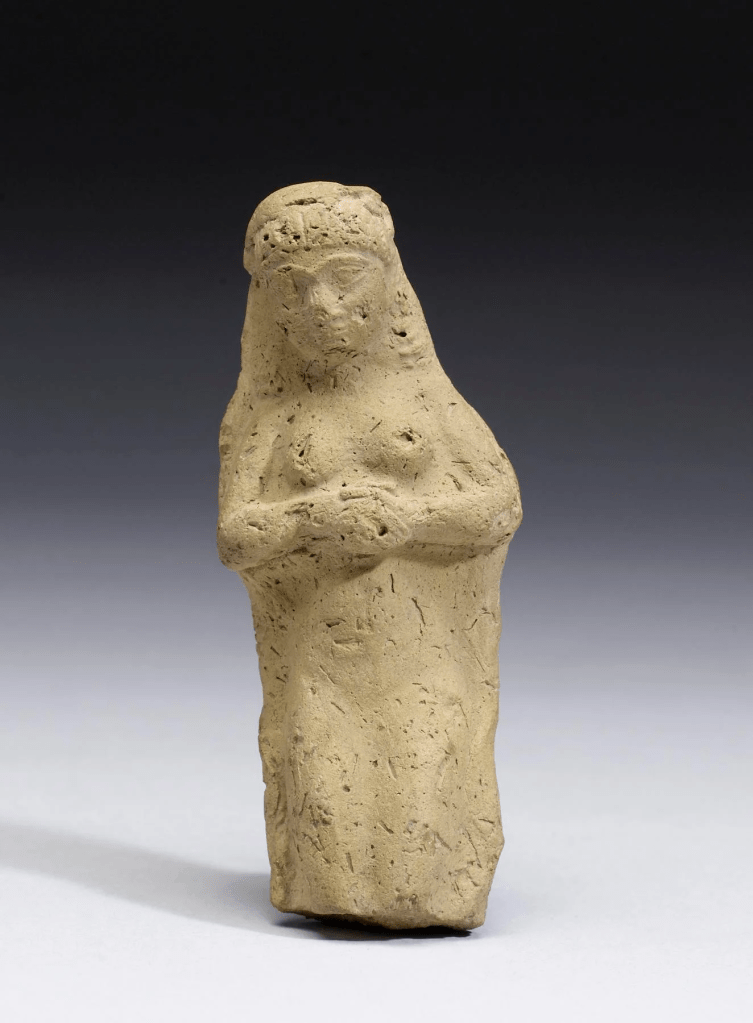
Did Beltum ever see her fatherland again? She probably did. Several sources refer to the practice of queens and princesses returning to their ancestral homeland for a brief period to honour the local gods and consequently see their parents again. The reason was officially religious, with the queen/princess expected to take the gods of her father back to the court of her husband. In one letter, the king of Qatna refers exactly to this practice: “bring my daughter along with you so that she could conciliate the gods of her city and so that I could give her many gifts. She should meet with me so that I could honour her (ARM 2 51, trans. J. Sasson)”. This journey would offer Beltum a good opportunity to see her loved ones again and revisit cherished childhood memories.
With the death of Šamši-Adad, the powerful hand that kept the empire together was suddenly gone. Yasmaḫ-Adad’s days were numbered, and he disappears from the record. His throne was challenged by a family member of the previous king of Mari, the Amorite Zimri-Lim, who had lived in exile at Ḫalab (Aleppo). He was determined to reclaim the throne for his dynasty and succeeded, heralding a new and final golden age for Mari. It’s unclear what happened to Yasmaḫ-Adad. He either died soon after fleeing the city of Mari or he survived and lived on: we simply don’t know. Neither do we know what happened to our Beltum. It is reasonable to assume that she was allowed to return to her parents in Qatna unharmed, with Zimri-Lim reluctant to enrage his western neighbours, especially so soon after having secured his kingdom. Insulting the king of Qatna would certainly not have helped in consolidating his rule.
Conclusion
The rich correspondence from Mari tells us in great detail the story of Beltum, a princess destined to become a queen in an unknown land. The letters demonstrate the importance of political marriages in establishing alliances in the Ancient Near East. Through the union of his son with Beltum, Šamši-Adad secured a crucial ally in his conflict with the western kingdom of Yamḫad. The friendship that developed between the two kingdoms was based on mutual obligations, such as the provision of military assistance, as well as shared privileges, such as allowing each other’s flocks to graze on their respective lands. The letters also offer a glimpse into the more human and emotional dimensions of such political marriages. They reveal the potential emotional distance between the partners, as well as the loneliness and alienation that could accompany life in an entirely new environment. Although every political marriage was unique, the relationship between Beltum and Yasmaḫ-Adad provides valuable insight into the complexities involved in forming such alliances and the sometimes unhappy consequences they entailed.
Olivier Goossens
Further Reading
- Dossin, G., Lettres: Archives Royales de Mari, Vol. 5, 1951, Paris.
- Koliński, R., “The Fate of Yasmaḫ-Addu, the King of Mari”, Fortune and Misfortune in the Ancient Near East: Proceedings of the 60th Rencontre Assyriologique Internationale at Warsaw 21–25 July 2014, eds. O. Drewnowska & M. Sandowicz, 2017, Winona Lake, pp. 221-236.
- Lafond, B., “Relations internationals, alliances et diplomatie au temps des royaumes amorites. Essai de synthèse”, Amurri, Vol. 2, pp. 213-328.
- Podany, A., Weavers, Scribes, and Kings: A New History of the Ancient Near East, 2022, New York.
- Sasson, J., From the Mari Archives: An Anthology of Old Babylonian Letters, 2015, Winona Lake.
 alongthesilkroad.com
Leave a comment