
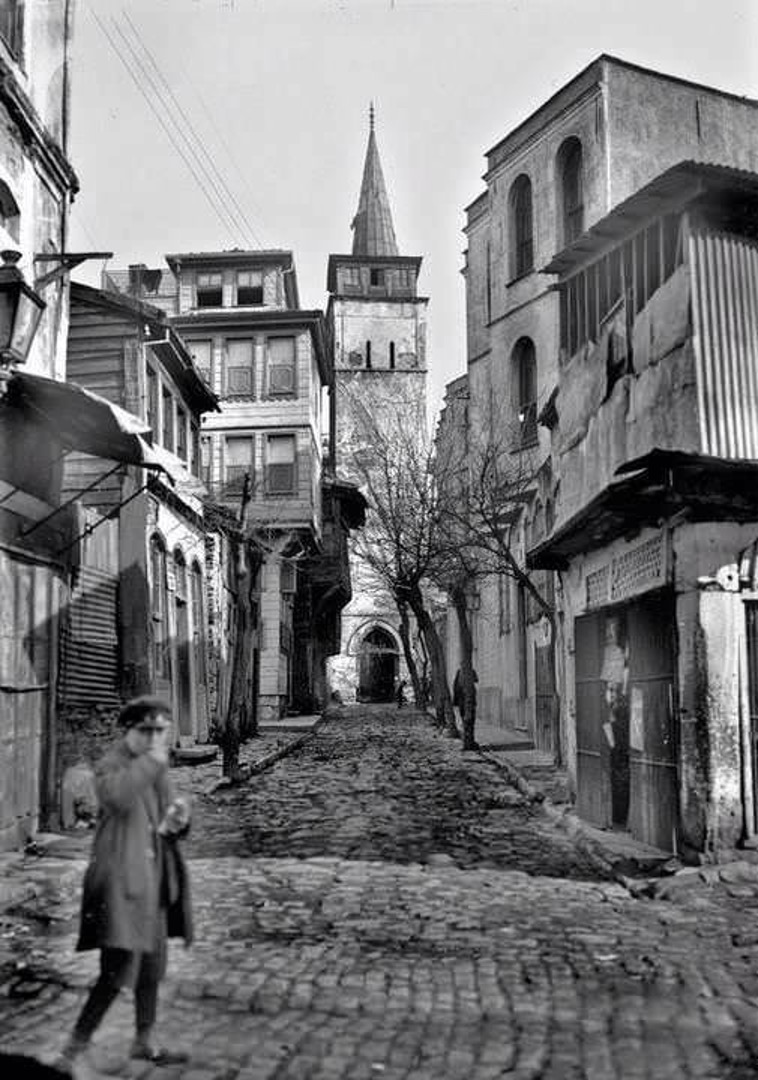
During my time in Istanbul as an undergraduate student, I enjoyed strolling through the historical districts of the city, and Karaköy was one of my favorites. This busy area on the slope of Galata always made me think about the passing of time, as the Galata Bridge, its one foot on this shore and the other on the historical peninsula, connects the two major settlements in the capital of the once-mighty Ottoman and Byzantine empires.
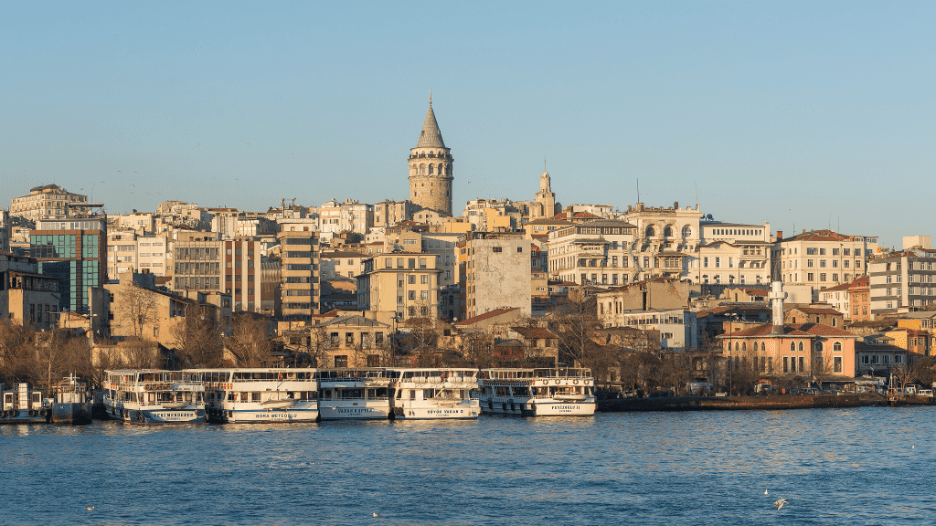
Karaköy’s history has been strongly shaped by the economic realities of these major powers. Throughout the Ottoman era, the district served as a significant port that sheltered sailors, sailmakers and fishermen. As of the nineteenth century, it housed banks, stock offices, insurance companies alongside taverns and hotels, making it an attractive center for trade and finance.1 This prominent commercial character of the district dates back to the Byzantine period, when Italian merchants were allowed to reside in Galata and its environs, during the reign of Emperor Manuel Komnenos (r. 1143-1180).2 The fierce competition between Genoa, Pisa, Amalfi and Venice became influential both in Byzantine politics and the urban development of the quarter. The still-standing Church of St. Domenico, now known as Arap Mosque, is a testament to the centuries-long Genoese presence in the city.
“The city served as a hub connecting Black Sea and Mediterranean trade routes while bringing together intellectuals and religious groups from diverse geographies.”
In 1104, Emperor Alexios I Komnenos (r. 1081 – 1118) granted tax exemptions to Genoa, Venice, and Pisa in exchange for military aid against the Norman threat.3 During this period, Italian merchants established commercial neighborhoods in Galata and expanded their influence over the trade networks of the Eastern Mediterranean.4 However, the sack of Constantinople in 1204 by the Latins, joined by the Italian maritime powers, drastically altered this already tumultuous relationship. Following the reconquest of Constantinople in 1261, the Genoese regained control over the Galata quarter and secured commercial privileges by pledging allegiance to Emperor Michael VIII Palaiologos (r. 1261-1282).5 This strategic move earned the Genoese temporal supremacy over other maritime states, especially Venice. Meanwhile, the empire’s deteriorating finances allowed Italian merchants to dominate commercial activities in the remaining Byzantine territories, particularly Constantinople.6 The city served as a hub connecting Black Sea and Mediterranean trade routes while bringing together intellectuals and religious groups from diverse geographies. The Dominicans, a Catholic mendicant order founded in 1215, were but a single piece in this vast human mosaic.
“The Church of St. Domenico displays a simple Gothic architectural style shared by other Dominican churches in the Mediterranean”
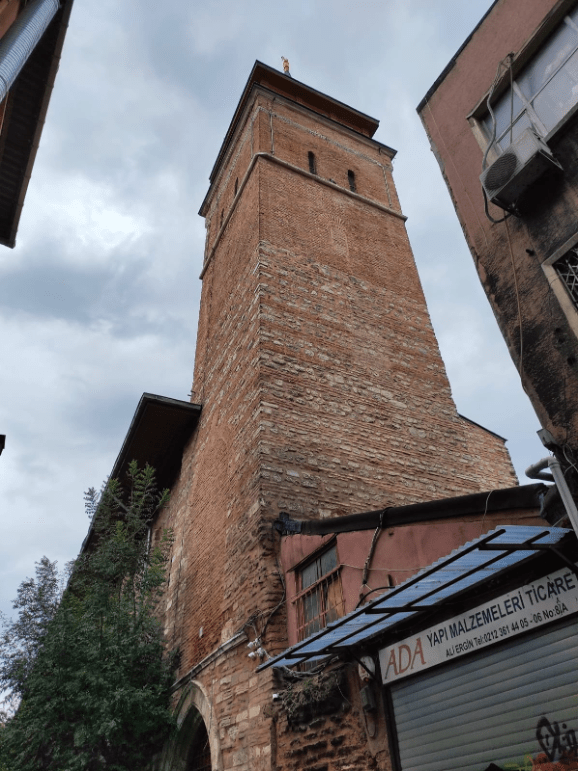
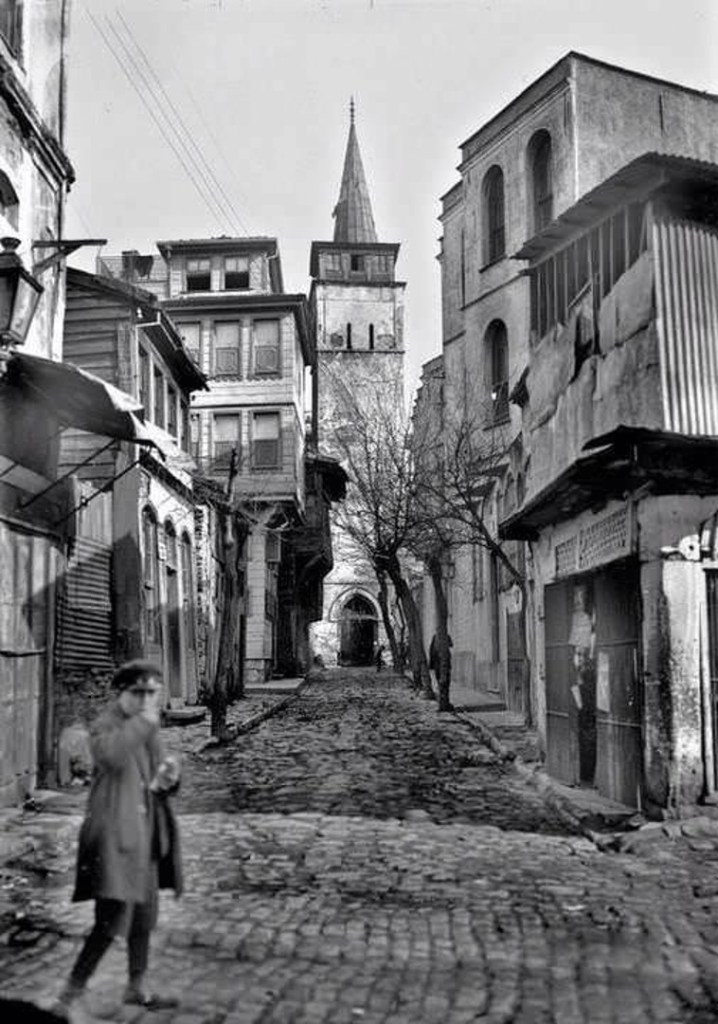
In 1307, by order of Emperor Andronikos II (r. 1282-1328), Dominican friars were forced to relocate to Galata, where they established a convent on top of a former cemetery.7 After a destructive fire, the friars established a new convent between 1323 and 1337, which constitutes today’s structure.8 The Church of St. Domenico displays a simple Gothic architectural style shared by other Dominican churches in the Mediterranean, with a belfry, rib-vaulted sanctuary and a three-aisled basilica covered by a timber roof.9 In fact, this simplicity reflects the mendicant teachings, on which the Dominican Order bases its values.10 The poorly preserved frescoes on the vaults show early Renaissance artistic developments as well as elements from contemporary Byzantine monumental painting, indicating possible artistic exchanges between Genoese and Byzantine masters.11
Since the mendicant orders prohibited their friars from acquiring wealth, financial support for the foundation of a convent was requested from wealthy members of the community.12 These benefactors may also have played a significant role in determining the decorative program of the convent.13 The tombstones preserved in the Arap Mosque shed light on the possible benefactors of the convent. In this regard, the marble slabs belonging to the illustrious Embriaco, Cataneo, Doria, Salvaigo and Spinola families deserve particular attention. The appearance of these families’ members in commercial documents and as ambassadors to Emperor Andronikos II indicates the strong political and commercial influence that the Genoese enjoyed within the Byzantine Empire.14
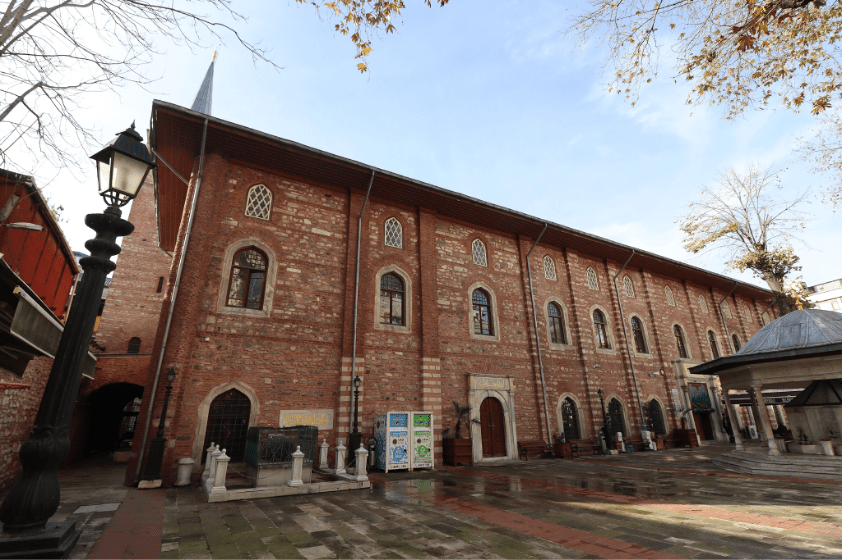
“After the fall of Constantinople to the Ottomans, the Church of St. Domenico was converted into a mosque and renamed ‘Cami-i Kebir'”
After the fall of Constantinople to the Ottomans, the Church of St. Domenico was converted into a mosque and renamed “Cami-i Kebir” (Grand Mosque) during the reign of Mehmed II (r. 1451-1481).15 The fall of the Emirate of Granada in 1492 triggered large-scale migration and led some Moors to seek refuge in Ottoman territories. Due to the Moorish population in Galata, the Grand Mosque began to be known as “Arap Camii”, the Mosque of Arabs.16 Although the building underwent significant alterations throughout the Ottoman period, the original masonry and arched-windows partially survived.17
Arap Mosque, once known as the Church of St. Domenico, epitomizes the cosmopolitan nature and interconnectedness of major pre-modern hubs such as Baghdad, Cairo, and Bruges. This taste, which bridges the “Old World” to the present, can still be found in the veins of modern Istanbul.
Cemre Melis Yordamlı
- F. Orçun Kafesçioğlu, “19. Yüzyılın İkinci Yarısından Günümüze Galata/Karaköy’de Kent Morfolojisi ve Yapı Türlerinin İncelenmesi” inİdealkent, 7.18 (2016), 174-203, esp. 176. ↩︎
- C. J. Hilsdale, “The Imperial Image at the End of Exile: The Byzantine Embroidered Silk in Genoa and the Treaty of Nymphaion (1261)”, DOP (2010): 151-99, esp. 157-8. ↩︎
- S. Origone, “Genoa and Byzantium: Aspects of a Long Relationship” in Byzantium and the West: Perception and Reality (11th-15th c.), ed. N. Chrissis, A. Kolia-Dermitzaki, and A. Papageorgiou (Routledge, 2019), 38-52, esp. 43. ↩︎
- S. Sicimoğlu Yenikler, “The Cultural Transformation of Genoese Galata From the Byzantine to the Ottoman Rule and Its Reflection on the Church of San Domenico,” in Cultures and Practices of Coexistence From The Thirteenth Through The Seventeenth Centuries, ed. M. Folin and A. Musarra (New York, 2021), 76-98, esp. 77. ↩︎
- S. Sicimoğlu Yenikler, “The Artistic Hybridity of the Church of San Domenico (Arap Camii): Mirroring the Multicultural Milieu of Galata from Byzantine to Ottoman Times” (Master’s Thesis, Koç University, 2019), 43-4. ↩︎
- N. Oikonomides. Hommes d’affaires grecs et latins à Constantinople: XIIIe-XVe siècles, (Montreal, 1979), 43. ↩︎
- S. Sağlam, “Transformation and Continuity of Sacred Places: The Case of Galata (Istanbul)” in İdealkent 31.11 (2020): 1832-1855, esp. 1839. ↩︎
- S. Sicimoğlu Yenikler, “The Cultural Transformation of Genoese Galata From the Byzantine to the Ottoman Rule and Its Reflection on the Church of San Domenico,” in Cultures and Practices of Coexistence From The Thirteenth Through The Seventeenth Centuries, ed. M. Folin and A. Musarra (New York, 2021), 76-98, esp. 79. ↩︎
- N. Melvani, “Dominicans in Byzantium and Byzantine Dominicans: Religious Dialog and Cultural Interaction,” in Domenicani a Constantinopoli prima e dopo l’impero ottomano, ed. C. Monge and S. Pedone (Firenze, 2017), 33-50, esp. 38. ↩︎
- Yenikler, “The Cultural Transformation”, 79. ↩︎
- E. Akyürek, “Dominican Painting in Palaiologan Constantinople: The Frescoes of the Arap Camii (Church of S. Domenico) in Galata” in The Kariye Camii Reconsidered, ed. H. A. Klein, R. G. Ousterhout and B. Pitarakis (Istanbul, Suna ve İnan Kıraç Vakfı, 2011), 327-41, esp. 331-2. ↩︎
- B. Rosenwein and L. K. Little. “Social Meaning in the Monastic and Mendicant Spiritualities.” in Past & Present, no. 63 (1974): 4–32, esp. 5. ↩︎
- Yenikler, “The Cultural Transformation”, 80, 82. ↩︎
- E. Dalleggio Alessio, Le Pietre Sepolcrali di Arab Giami (Antica Chiesia di S. Paolo a Galata), (Genoa, 1942), 38-39, 55-56. ↩︎
- S. Sağlam, “Transformation and Continuity”, 1840. ↩︎
- S. Sağlam, “The Arap Mosque Tombstones’ Long Life (Galata, Istanbul): Architectural Reusage, Damnatio Memoriae, Neglect,” in Sepolture Medievali (IV–XV secolo): Spazi, opere, scritture / Medieval Burials (4th–15th Centuries): Spaces, Artworks, Writings, vol. 1, ed. Fabio Coden (Milan: Silvana Editoriale, 2024), 202–229, esp. 203. ↩︎
- Ibid., 202. ↩︎
 alongthesilkroad.com
Leave a comment