
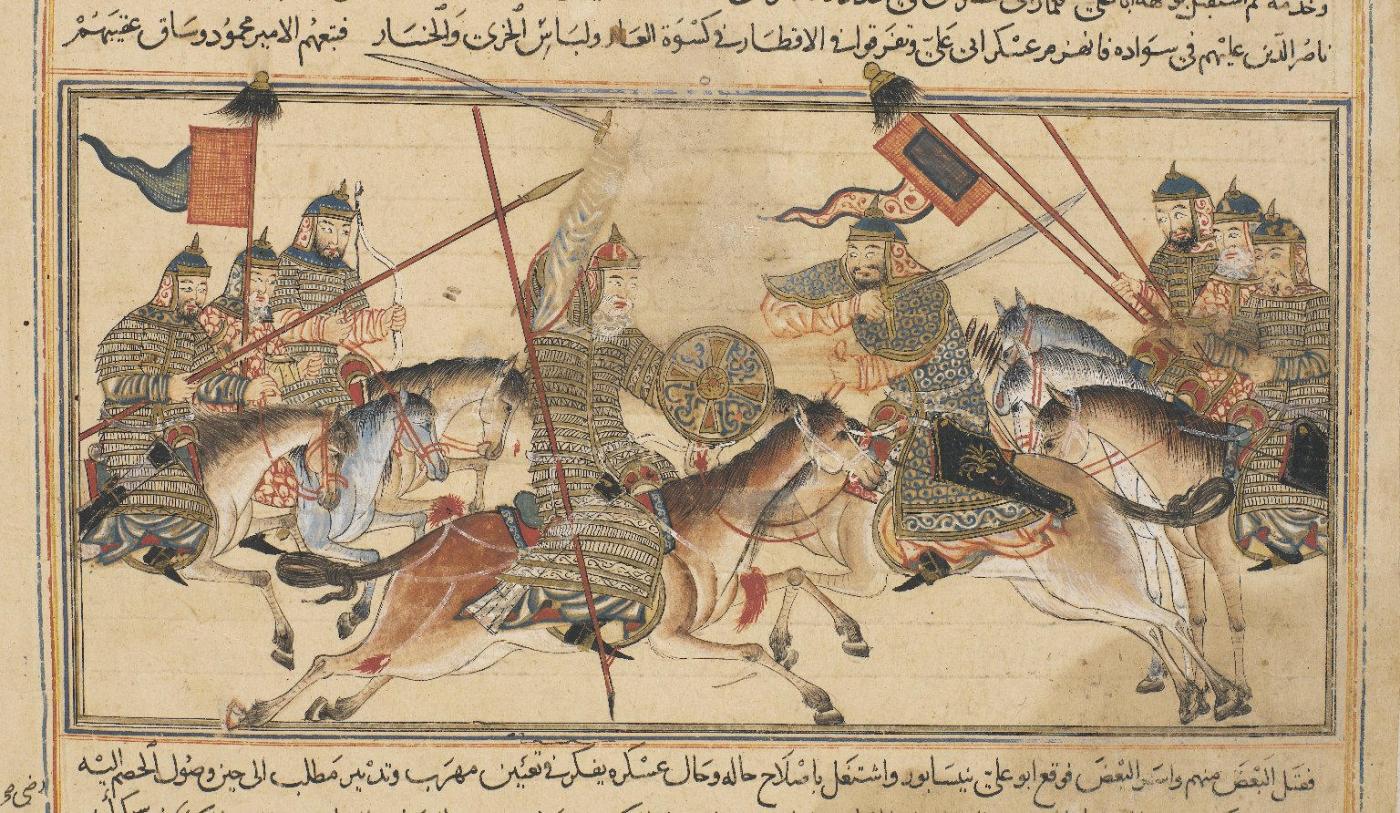
From the ashes of the once so mighty Samanid Empire arose a new superpower, led by the amīrs’ former servants. Nurtured in the rough steppes of Central Asia and battle-hardened through the incessant warfare that terrorized the waning Abbasid Caliphate, these Turkic warlords would change the course of history, heralding the start of the Turkic age in Islamic history. They built upon the traditions set by their Persian and Arabic predecessors but simultaneously established an entirely new model of rulership which became ingrained in Central Asia’s political ideology. Lauded by many as the architects of a vibrant culture, and spurned by others as a destructive force that signalled the end of the Islamic Golden Age, this dynasty’s legacy continues to puzzle moralists and historians alike to this day. Enter the Ghaznavids. This first article in a series about this dynasty aims to shed some light on the circumstances in which this sultanate grew, and the figures who lifted the Afghan city of Ghazna from a regional town to the centre of Islam’s first Turkic superpower.
Historical Background
Turkic warriors from the Central Asian steppes appear in Islamic history from the outset. During their struggle against the rampaging armies of the caliph, Sogdian rulers fielded Turkic mercenaries against their new foe in the late 7th and early 8th centuries CE. When the caliphate had secured its rule over the Iranian plateau, it in turn looked to the Turkic world for manpower. During its numerous jihad raids into Central Asia, thousands of tribesmen were imprisoned and pressed into Baghdad’s armed forces. This is an interesting slaving strategy, as it reflects the Islamic eagerness to entrust military power to unfree men. This stands in sharp contrast to other societies, such as democratic Athens, where fighting on the battlefield was considered a privilege of freeborn men. In Islam, on the other hand, slaves (ghilmān, mamālīk) became a central pillar of the ruler’s military might. Although bondsmen of many other cultures and ethnicities were conscripted, Turks were especially valued for their bravery and equestrian prowess. The integration of slaves into the army also gave the caliphs the advantage of possessing a corps of soldiers solely loyal to them, rather than to one of the numerous Arab tribal chiefs who squabbled ceaselessly among themselves.
“Turks were especially valued for their bravery and equestrian prowess”
The impressment of Turkic slaves into the armies of Islam persisted when the caliphate decentralized and local dynasties began wielding effective power west of Iraq’s Zagros mountain range. The most important state to emerge in the regions of Khorasan and Transoxiana was the Samanid Empire. Lying at the frontiers of Islam, the amīrs of Bukhara were in a perfect position to carry on the tradition of recruiting Turkic slave soldiers. Thus, large swathes of Turks flocked into Persia and the wider Islamic world. Many of these subsequently converted to the Sunni branch of Islam and were deployed as fighters of the faith (ghāzīs) on the frontiers against their pagan kinsmen, a role in which they took much pride. These Turks, however, harboured ambitions of their own and could not satisfy themselves forever with the role of mere servants. They were ready to take their place among the great dynasts of Islam.
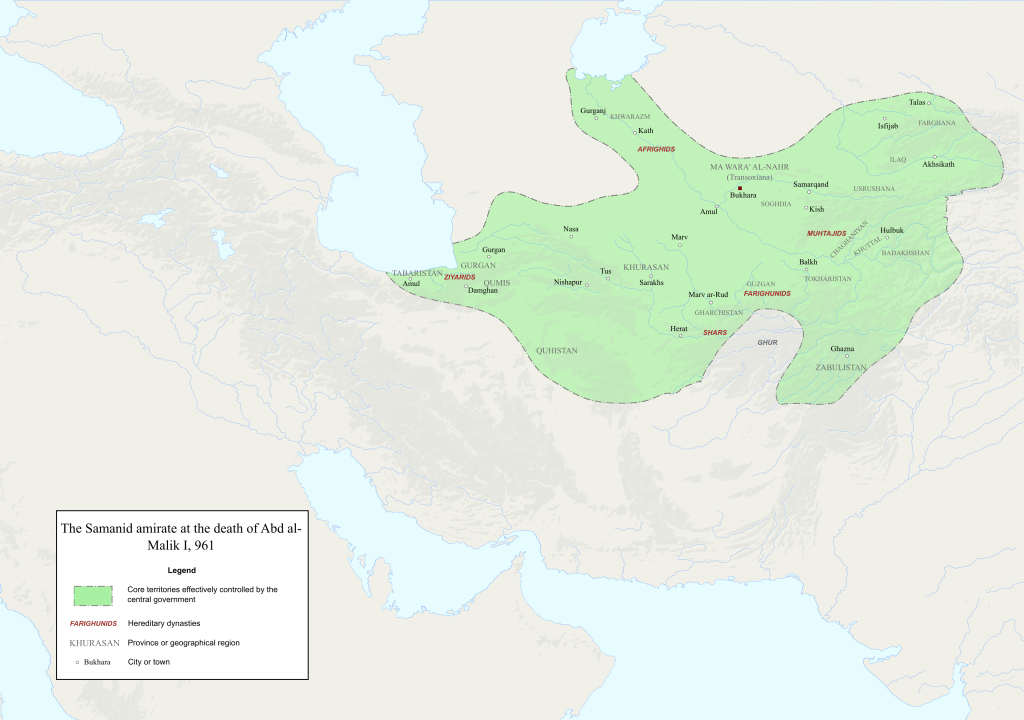
By the end of the 10th century, the Samanid Empire was in its twilight. Various generals of the amīr took full advantage of the situation and began amassing power and wealth to the detriment of the central authorities at Bukhara. One such ambitious warlord was the Turkic general Alptigīn. He was a Turkic former slave, captured and subsequently employed in the personal bodyguard of amīr Ahmad ibn Ismā’il (r. 907–914). He was then emancipated by Nasr II (r. 914–943) and given his first command by Nuh I (r. 943–954). Alptigīn rapidly rose in the empire’s hierarchy to the highest echelons during ʿAbd al-Malik’s reign (r. 954–961). He exercised great influence over the youthful amīr, securing through his favour the position of commander-in-chief of the army. After a failed attempt to place his own candidate on the throne following ʿAbd al-Malik’s death in 961, however, he was forced to withdraw to the periphery of the empire, establishing himself and his warriors in the distant city of Ghazna in southern Afghanistan. He died shortly thereafter, in 963.
Subuktigīn: The Just Amīr (Amīr-i-‘Ādil)
“The Amīr Nasr-ad-Din was a Turk by origin, adorned by special favours of God, a mirror of royalty and authority, in the day of battle furious as a lion, then liberal as the showers, he still distributed favours and kindness unto all.”
-al-‘Utbī, Kitab-i-Yamini, trans. J. Reynolds
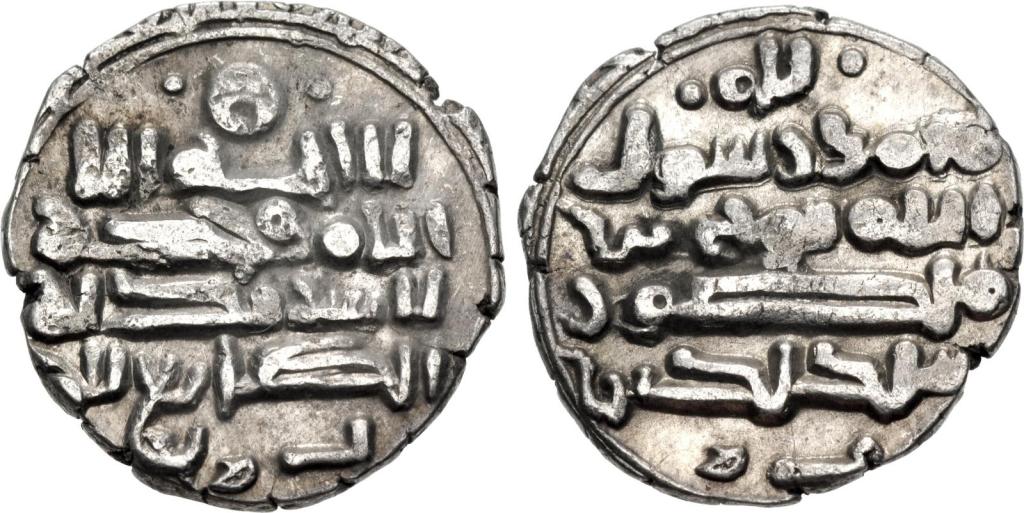
After a weak reign by Alptigīn’s son Abū Ishāq Ibrāhīm (r. 963–966), an eventless rule by Bilkātigīn (r. 966–974/975), and a short kingship by Pirītigīn (r. 975–977), power over Ghazna passed into the hands of one of Alptigīn’s most loyal and competent servants, Subuktigīn. Born around 942–43, Abū Mansūr Subuktigīn was the third son of a Turkestān chieftain named Jūq. At the age of twelve, the Turkic prince was captured during a raid by a neighbouring tribe. He ended up in the household of Nasr the Hājjī, where he probably embraced Islam. The young man displayed a remarkable talent in the art of swordsmanship, gaining him the favour of his master. While at Bukhara, Subuktigīn caught the attention of Alptigīn, who promptly purchased him to serve in his own warband. He quickly rose through the ranks. After Alptigīn’s death in 963, he remained close to the latter’s son, Abū Ishāq, who considered Subuktigīn his most trusted officer. He was even deemed worthy enough to take Alptigīn’s daughter’s hand in marriage.
“The young man displayed a remarkable talent in the art of swordsmanship, gaining him the favour of his master.”
He truly proved his worth during Pirītigīn’s reign (r. 975–977), when, near Charakh, at the head of a small force of 500 slaves, Subuktigīn crushed a combined force of Abū ʿAlī Lawīk and the king of Kābul. Having earned the respect of the Ghaznavid elite and warriors, he was shortly thereafter proclaimed the new ruler of Ghazna on 20 April 977.
The new leader of the ghulāms did not remain idle in his capital, leading his slave warriors against various foes during his reign. The Turkic dynast was assisted in his aspirations by his son Maḥmūd, begotten from his union with the daughter of a noble from Zābulistān, eastern Afghanistan. Maḥmūd was a well-educated man, said to have memorized the entire Qurʾān.1 He was also well instructed in many other branches of learning, such as statesmanship and Islamic law. It was, however, in the art of war that the young man truly flourished and would show his great potential to his father. Already at the age of seven, Subuktigīn began entrusting the young lad with important responsibilities, such as the governance of Ghazna while he went to war against Bust.
Bust, which lay to the southwest of Ghazna, was then in the hands of a rival band of Turkic ghulāms, led by Baituz. After defeating his enemy and incorporating Bust into his territory, he led the Ghaznavid soldiers eastwards into the “land of unbelief” (dār al-kufr), i.e. India.
“He turned then upon these regions and provinces, and extinguished by the water of his sword-wounds the sparks of idolatry struck from their fire-altars, and gave to the winds the temples and meeting-places of those base ones”
-al-‘Utbī, Kitab-i-Yamini, trans. J. Reynolds
Via the valley of the Kabul River, he initiated his fierce campaign against the Hindūshāhiyya dynasty, led by Jaipāl. This principality ruled over the northwestern plains of the subcontinent, around the confluence of the Indus and Kabul rivers. The Turkic and Hindu armies met near a hill called Ghūzak, somewhere between Ghazna and Lamaghān. Despite their stiff and valiant resistance, the Hindu army was finally broken through the seemingly divine intervention of a snowstorm, which caused consternation among Jaipāl’s troops.
“the Ghaznavids confronted and defeated yet another, even larger Hindūshāhiyya host of around 100,000 soldiers and cavalrymen”
The Hindūshāhiyyas consequently sued for peace but broke the truce when they imprisoned Subuktigīn’s envoys, who had come in good faith. Angered by Jaipāl’s change of heart, the Ghaznavids confronted and defeated yet another, even larger Hindūshāhiyya host of around 100,000 soldiers and cavalrymen, swelling to such numbers through reinforcements from other northern Indian rājās who had allied themselves with Jaipāl. After this clear victory, the districts between Lamaghān and Peshāwar were added to the Ghaznavid territory. Despite Subuktigīn’s power having risen dramatically, he still refrained from formally declaring independence from the Samanids. In fact, his exploits against the Hindus were cut short by a call for help from Bukhara.
Our main source: al-‘Utbī
An important contemporary source for understanding the rise of the Ghaznavid Empire is the Kitāb-i-Yamīnī by Abū Naṣr Moḥammad b. ʿAbd al-Jabbār al-ʿUtbī (c. 961?–1036 or 1040). Al-ʿUtbī, to whom this article frequently refers, was a secretary and courtier of the dynasty who was probably born in Ray, Iran, around 961. Ambitious, he gained access to the Samanid administration in Bukhara through his uncle at a young age. When it became apparent that the Samanids’ days were numbered, he changed allegiance and entered the service of Subuktigīn. Despite a shaky start to his relationship with Subuktigīn’s successor, Maḥmūd, he eventually won the sultan’s favour. Around 1020, al-ʿUtbī began composing his history of the early Ghaznavids. The title Yamīnī was a reference to Maḥmūd’s honorific Yamīn al-Dawla (“the right hand of the [Abbasid] state”), which had been granted by the caliph in Baghdad. The work describes the rise of the empire under Subuktigīn and Maḥmūd in a verbose and ornate Arabic style. It was later translated into Persian by Jorfāḏeqānī between 1206 and 1207 at the order of a vizier. The well-known English translation by James Reynolds (1858), used by the present author, is based on this Persian version. Given al-ʿUtbī’s position at Maḥmūd’s court, it is not surprising that the work generally praises the Ghaznavids and their achievements, although subtle criticism of other courtiers—and even of the sultan—can occasionally be detected. The historian drew on a wide variety of sources and may be counted among the “rationalist” school of Islamic historiography, which placed great value on accuracy and truth, although his remarkable and sometimes fantastical narratives never cease to fascinate.
The amīr Nuh II (r. 976–997) was constantly beset by rebellious generals who sought to take advantage of the empire’s waning power. This time, he was confronted by a formidable alliance between the Turkic general Fāʾiq and Abū ʿAlī Sīmjūrī. It was time to put the Ghaznavids’ loyalty to the test. Subuktigīn and his son Maḥmūd answered the call and arrived at the scene in all haste. Near Herāt, on 23 October 994, a timely attack by Maḥmūd routed the rebels, with Abū ʿAlī seeking refuge with the Buyid amīr Fakhr al-Dawlah at Rayy. Nuh II showed due gratitude by awarding the province of Balkh to Subuktigīn and by entrusting Maḥmūd with command over the Samanid forces of Khurasan. Khurasan was to become the young Turkic prince’s power base. Maḥmūd certainly had no reason to complain, as Khurasan, the eastern portion of the Iranian plateau, constituted one of the Samanid Empire’s most lucrative regions. It was dotted with various legendary cities such as Bukhara, Nīshāpūr, and Samarkand, which drew their wealth from trade along the Silk Road. These cities produced luxurious textiles that were in high demand throughout Central Asia, Persia, and beyond. Despite the scarcity of water, Khurasan had also become a flourishing agricultural region through extensive and ingenious canal networks. These favourable economic and commercial circumstances turned Khurasan into the cultural heart of the eastern Islamic world, with numerous legal jurists and theologians originating in its vibrant towns. It likewise became the centre stage for the development of New Persian literature and poetics, with perhaps the greatest names being Rudakī, the founder of New Persian poetry, and Ferdowsī of Ṭūs (940–1025), the genius behind the Shāhnāmeh, who later came under Maḥmūd’s patronage. As C. E. Bosworth puts it, Khurasan “provided the material basis for much of Maḥmūd’s imperial achievements.”2
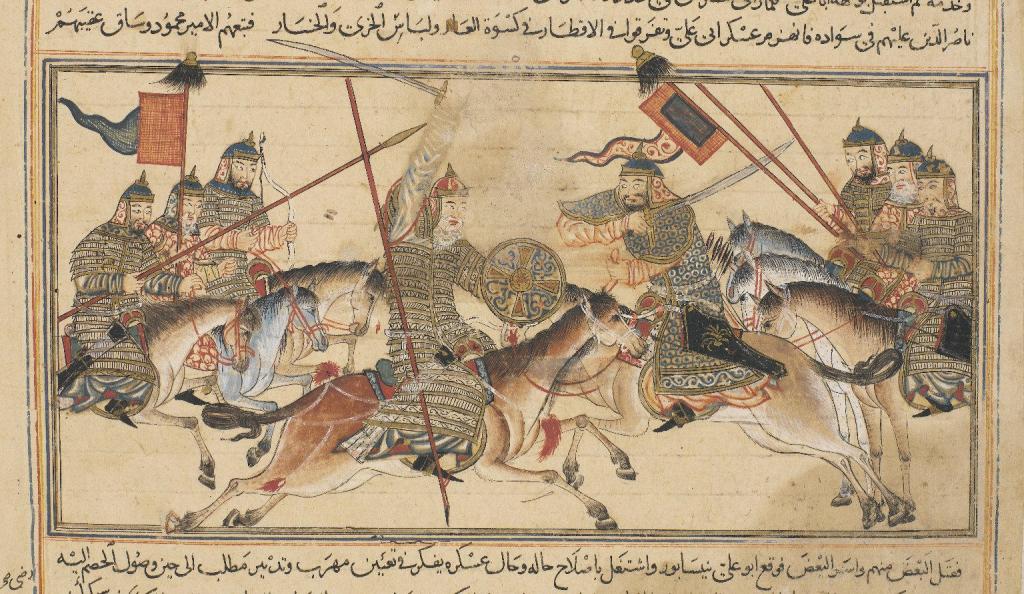
Fāʾiq and Abū ʿAlī decided to try their luck one more time, however, surprising Maḥmūd at Nīshāpūr and forcing the Ghaznavids out of the city. Subuktigīn would have none of it, and after linking up with his son, gave battle once again to the rebels. They were decisively beaten near Ṭūs on 22 July 995. The danger from Fāʾiq and Abū ʿAlī finally ebbed away, but the Turkic dynasty did not have the opportunity to relish its victory for long, as another tribulation befell the Ghaznavids. On his way to Ghazna, Subuktigīn fell ill and drew his last breath in the village of Mādrū Mūy in August 997. According to al-ʿUtbī, he died as a result of his uncontrollable grief over the recent passing of multiple family members.3 Subuktigīn’s death was mourned by many, including his warriors, “whose hardships he had always shared.”4 His good reputation had earned him the nickname Amīr-i-ʿĀdil, i.e. “the Just Amīr.” With their strong leader now gone, the Ghaznavids’ future suddenly became uncertain. New problems loomed on the horizon: court rivals, an unclear succession, and a major threat from outside the Samanid realm. It would take a man of remarkable character to surmount all these challenges and lead the Ghaznavids to their greatest days of glory from the mists of these trying times. This man was Maḥmūd.
Olivier Goossens
Further Reading
- al-‘Utbī, Kitab-i-Yamini, transl. J. Reynolds, 1858, London.
- Bosworth, C., “The Early Ghaznavids”, The Cambridge History of Iran: Volume 4: The Period from the Arab Invasion to the Saljuqs, 1975, Cambridge, pp. 162-197.
- Bosworth, C., The Ghaznavids: Their Empire in Afghanistan and Eastern Iran: 994-1040, 1963, Edinburgh.
- Nāzim, M., Sultan Mahmud of Ghazna, 1931, Cambridge.
- Starr, F., Lost Enlightenment: Central Asia’s Golden Age from the Arab Conquest to Tamerlane, 2013, Princeton-Oxford.
 alongthesilkroad.com
Leave a comment