
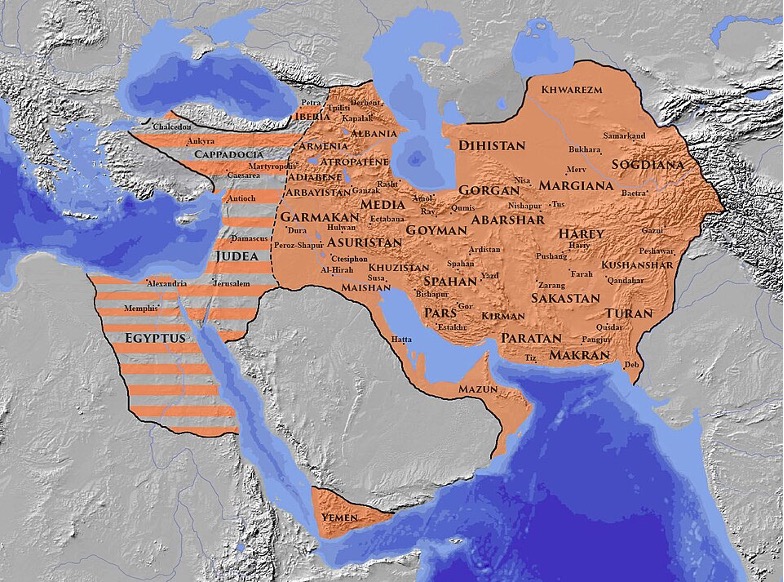
The Sasanian Empire, the last native Persian dynasty to rule Iran before the Arab conquest, was a juggernaut of the ancient world. At its height, its realm stretched from Central Asia in the east to the Sea of Marmara in the west, and its armies proved a match for Rome’s mighty legions time and time again. The empire was also a cultural titan,its reign marking a golden age in Iranian civilization and witnessing a flourishing of art, architecture, and learning. And one of the ways that the Sasanians displayed this flourishing culture, just as previous Iranian dynasties did before them, was through food.
From hearty stews like Khoresh Fesenjan to rich sauces and dips like mirza ghassemi, food occupies an enormous part of Iranian culture today, not only as nourishment but as a form of cultural expression. While Iran’s cuisine has evolved over thousands of years, many of its underlying values, an emphasis on balance, hospitality, and ceremony, echo traditions that reach back into antiquity. At the heart of this culinary culture stood the royal court, where feasting was not merely a pleasure but a statement of power, order, and cosmopolitan sophistication.
This article will look at the role of food and feasting held at the highest level of Sasanian society, the court of the King of Kings himself. We will delve into the cultural practices and etiquette that would be found at the Great King’s table and the food and drink that would have delighted the senses. Finally, we shall observe what these foods can reveal about the Sasanian Empire’s place in the world and the people it came into contact with, especially with its position astride the mighty Silk Road.
The Do-s and Don’t-s of a Sasanian Royal Feast
“As with the Achaemenids, a Sasanian royal banquet was as much a performance as a meal.”
The Sasanians inherited an already ancient tradition of feasting, rich with meaning and symbolism. Evidence for communal banquets in Iran stretches back millennia, with archaeological remains from the site of Chogha Mish in southwestern Iran indicating organized feasting as early as the fourth millennium BCE. Over time, Iranian dining traditions absorbed influences from neighbouring Mesopotamia and grew increasingly elaborate.
Under the Achaemenid Empire, royal banquets became spectacles of imperial power. The Great Kings were famed for hosting enormous feasts featuring food and drink drawn from across their vast realm, sometimes attended by thousands of guests during festivals such as Nowruz or on the king’s birthday. Etiquette at these gatherings was highly formalized: even the way one held a wine cup could signal refinement and status, while proximity to the king’s dining chamber marked a guest’s rank within the imperial hierarchy. When the Sasanians came to power in the third century CE, they took this ancient tradition and further refined it.
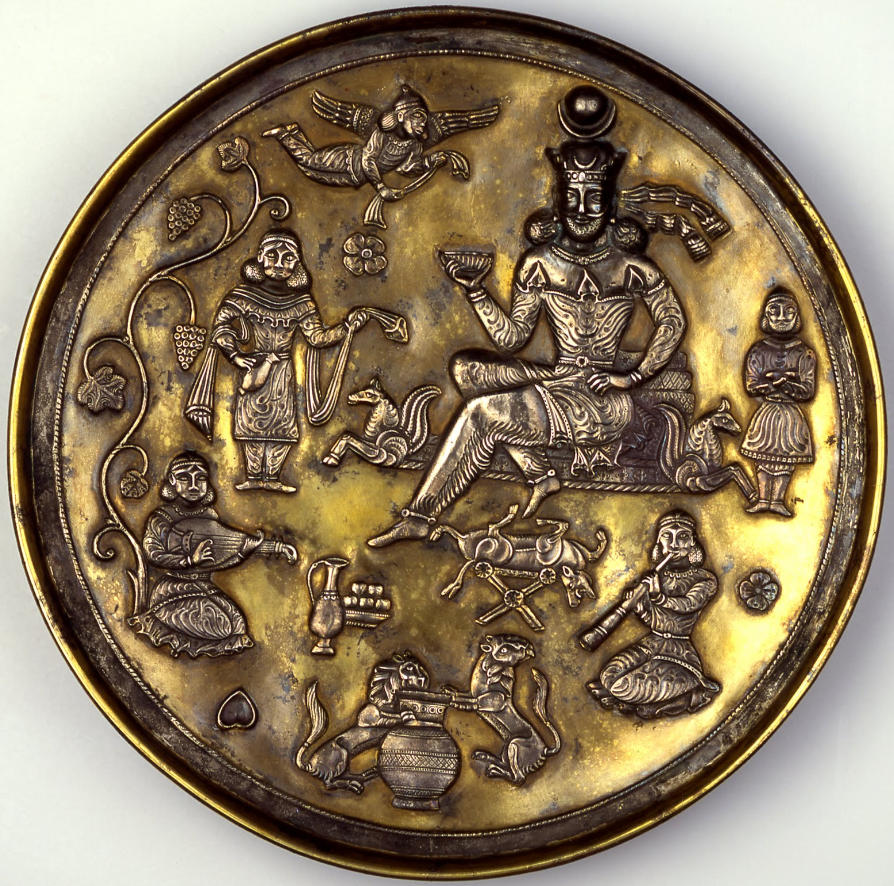
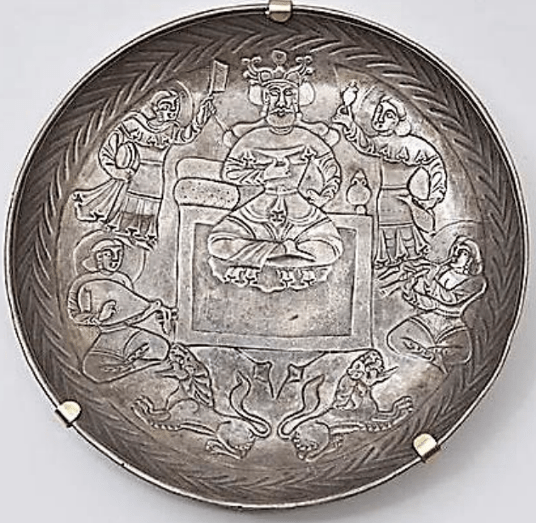
As with the Achaemenids, a Sasanian royal banquet was as much a performance as a meal. Silver plates discovered during archaeological excavations show feasting scenes in which the king dines while musicians play harps, flutes, and the barbat, an Iranian lute. Wine features prominently in these images, reflecting its long-standing association in Iranian culture with celebration, prosperity, and divine favour. The Sasanians also perfected the crafting of elaborate metal drinking vessels, including the horn-shaped rhyton, further suggesting that drinking rituals formed an important part of elite banquets.
Despite the festive atmosphere, guests were expected to observe strict rules of etiquette. Much of what we know about courtly behaviour comes from later literary works such as Khosrow and Redag and from Greek and Arabic writers who described the elaborate ceremony of the Persian court.Upon entering the royal presence, one was required to show deep respect to the king, sometimes by bowing or prostrating in a manner reminiscent of earlier Achaemenid practice. If granted the rare privilege of speaking directly to the ruler, a guest was expected to cover their mouth, avoid crude behaviour, and refrain from mentioning ill omens or unpleasant matters.
Seating at the banquet was determined by rank and by the will of the king, and proper conduct at the table was essential. Guests had to address one another using the correct titles, avoid interrupting their social superiors, and listen attentively when a higher-ranking noble spoke. Although wine, especially prized vintages from Babylon and Fars, flowed freely, excessive drunkenness was frowned upon, and diners were expected to eat slowly and with restraint. Courtesy extended even to the end of the feast: when departing, a guest was expected to thank the king and withdraw without turning their back on him.
Now that we have seen how one was expected to behave at a Sasanian royal banquet, it is time to examine the menu itself. The dishes served at the table of the King of Kings not only reveal the tastes of the court, but also the vast trade networks to which the empire belonged, stretching across Iran and along the Silk Road.
Foods of a World Empire
“Meat formed a major component of the dishes served at court, just as it had in earlier Persian times.”
One of the best sources for discovering what was eaten at a Sasanian royal banquet is Khosrow and the Page, a work of Middle Persian literature in which a young nobleman presents himself before King Khosrow seeking a position at court. To determine whether the youth possesses the refinement expected of a courtier, the king asks him thirteen questions on subjects ranging from horsemanship to music. Of particular interest to us is the moment when Khosrow asks what foods are most suitable for a royal feast, providing a rare glimpse into elite culinary tastes.
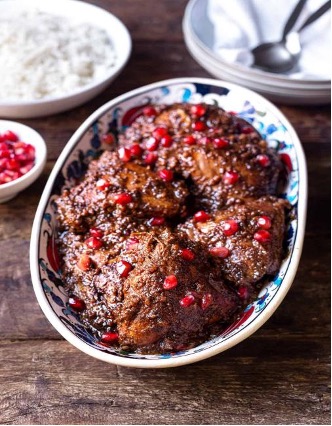
Meat formed a major component of the dishes served at court, just as it had in earlier Persian times. Livestock such as lamb, beef, and poultry appeared frequently, alongside more exotic fare drawn from across the empire, including peacocks, camels, and wild donkeys. These meats could be roasted over an open fire or cooked slowly in rich stews, methods that recall dishes such as khoresh fesenjan, the famous walnut and pomegranate stew still enjoyed today. Meat was also eaten cold in the form of afsardhalām, or “potted meats,” one example being xāmīz, raw meat preserved in vinegar. According to Khosrow and the Page, rabbit made the most tender xāmīz, while sand grouse produced the most fragrant.
Bread was already a staple of the Persian diet and held such cultural importance in the Sasanian period that it was said to be given to righteous souls in the afterlife. As Iranian trade networks expanded, bread was increasingly accompanied by rice, another food that would later become central to Iranian cuisine, though it does not seem to have been as dominant in Sasanian cooking as in later centuries. Fruits and vegetables also played a major role at the royal table, supplied by the empire’s vast territories. Onions, cucumbers, quince, apples, pomegranates, and many other produce items appear in literary and archaeological evidence.
The Sasanians also had a notable fondness for sweets, which Khosrow and the Page associates with different seasons of the year. In summer, almond and walnut sweetmeats were considered ideal, along with pastries made with deer fat and fried in walnut oil. In winter, diners were advised to enjoy puddings and jellies made from apples and quinces.
Fruit preserves may also have been an important part of the Sasanian diet. With access to a wide range of fruits, plums, citrus, cucumbers, and others, Sasanian cooks prepared various sweet conserves and jams, a tradition that later became firmly established in Iranian cuisine. These were accompanied by small delicacies such as roasted pistachios from northwestern Iran, candied nectarines from Armenia, and hempseeds fried in mountain goat fat.
It is said that the Achaemenid king Xerxes once claimed he would eat only food produced within his own empire. Even this was hardly a restriction, given the vast lands under Persian rule. The Sasanian kings, however, presided over a world even more connected than that of their predecessors. Their empire stood at the crossroads of Asia, linked to distant regions by one of the greatest commercial networks in history.
The Silk Road: Bringing the World to the Sasanian Dinner Table
“To dine at the table of the King of Kings was therefore not only to enjoy a meal, but to witness the wealth, reach, and cosmopolitan character of the Sasanian Empire itself.”
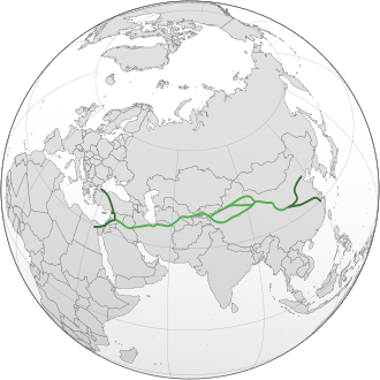
The position of the Sasanian Empire allowed it to take full advantage of the flow of goods and ideas moving along the Silk Road. To its east lay the oasis cities and kingdoms of Central Asia, the rich cultural centres of India, and the prosperous lands of China. To its west lay the territories of the Eastern Roman Empire and the distant regions of Africa and Europe. The Sasanians profited greatly from taxes levied on merchants travelling these routes, but they also gained access to a remarkable variety of goods, especially luxury items and rare foodstuffs that found their way to the royal table.
The Sasanian court appears to have taken a particular interest in foods associated with the eastern reaches of the Silk Road. In Khosrow and the Page, the ideal jam to serve at a royal banquet is described as one made from plums mixed with Chinese ginger and sweetened with sugar and honey, showing that ingredients from distant lands were already valued at court. Trade with the east also helped spread new culinary techniques. Noodle-like dishes, which may have travelled westward through Central Asia, eventually became part of Iranian cooking, surviving today in foods such as the soup ash-e reshteh. Fruits that had originally come from China, including peaches and apricots, were also well established in Iran by the Sasanian period and became important ingredients in both savoury dishes and desserts.
India was another major source of new flavours. Iran already possessed its own spice traditions, saffron, one of the most prized spices in the ancient world, was native to the region, but trade brought additional seasonings such as pepper, cinnamon, and cardamom into the Sasanian culinary repertoire. Rice, which would later become a cornerstone of Iranian cuisine, also spread gradually westward from India during late antiquity. Sugar, first cultivated in India, reached Iran through these same trade networks, and later writers credited the Sasanians with developing new ways of refining sugar into syrups and crystals that could be used in sweets and preserves.
The Sasanians also incorporated ingredients from their western neighbours, particularly the Eastern Roman Empire. Contact through trade and diplomacy brought Mediterranean products such as olives, wine, and herbs into Iran, while interaction between the two great empires encouraged the adoption of increasingly elaborate dining customs. Tableware became more sophisticated, and banquets at the Sasanian court reflected the same taste for luxury and ceremony that characterised imperial dining in the Roman world.
Beyond their culinary appeal, these imported foods also carried political meaning. Throughout Iranian history, the ability to provide abundant and exotic dishes had been an important display of royal authority. Under the Sasanians, whose empire stood at the crossroads of Eurasia, this display reached new heights. A royal banquet might include meats from the Iranian plateau and Central Asia, rice and spices from India, fruits from China, and wines from Mesopotamia or the Mediterranean. To dine at the table of the King of Kings was therefore not only to enjoy a meal, but to witness the wealth, reach, and cosmopolitan character of the Sasanian Empire itself.
The World on a Plate
“In every carefully prepared stew, every fragrant dessert, and every table laid for guests, one may still glimpse the legacy of a world empire that once placed the riches of the Silk Road upon a single plate.”
Beyond their majestic monuments and formidable armies, the royal feasts of the Sasanian Empire were a powerful expression of how its rulers wished to present themselves to their subjects and to the wider world. These banquets were displays not only of wealth, but of sophistication and cultural refinement, visible in the choice of foods, the care taken in their preparation, and the strict etiquette that governed every moment at the royal table. They reveal an empire confident in its traditions yet eager to draw upon the wealth of ingredients and ideas flowing along the Silk Road, transforming foreign influences into something distinctly Iranian.
Though more than a millennium has passed since the fall of the Sasanian kings, echoes of their culinary world can still be found in Iranian cooking today. The love of balanced flavours, the use of fruits, nuts, and spices, and the importance of hospitality and shared meals all recall a tradition in which food was more than sustenance, it was a statement of culture, identity, and power. In every carefully prepared stew, every fragrant dessert, and every table laid for guests, one may still glimpse the legacy of a world empire that once placed the riches of the Silk Road upon a single plate.
Milo Reddaway
Further reading
- Astaneh, S., 2021. BANQUETS, POWER AND IDENTITY–MEDIATION OF POWER AND IDENTITY THROUGH ROYAL FEASTINGS AND BANQUETS IN PERSIA.
- Azarnouche, S., 2013. Husraw ī Kawādān ud Rēdag-ē «Khosrow, fils de Kawād, et un page», texte pehlevi édité et traduit. Association pour l’avancement des études iraniennes.
- Bromberger, C., Ghanoonparvar, M. R., Hjortshøj, K. and Lozinski, B. P. (2011) ‘COOKING’, Encyclopaedia Iranica. Available at: https://www.iranicaonline.org/articles/cooking/ (Accessed: 12 March 2026).
- Carter, M.L., 1974. Royal Festal Themes in Sasanian Silverwork and their Central Asian Parallels. In Hommage universel I (pp. 171-202). Brill.
- Canepa, M.P., 2010. The two eyes of the earth: Art and ritual of kingship between Rome and Sasanian Iran (Vol. 45). Univ of California Press.
- Keaveney, A., 2014. Sasanian Persia: The Rise and Fall of an Empire. By Touraj Daryaee.
- Laudan, R., 2013. Cuisine and empire: Cooking in world history (Vol. 43). Univ of California Press.
 alongthesilkroad.com
Leave a comment