
In this piece, our linguistic specialist Rik Verachtert takes a look at the Greek term for barbarian, what it actually means, and whether it carried any negative connotations.
Who Is a Barbarian? Foreigners in the Ancient Greek Language
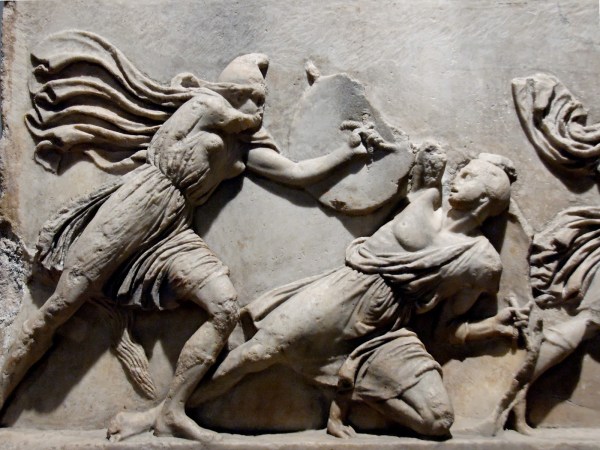
In this piece, our linguistic specialist Rik Verachtert takes a look at the Greek term for barbarian, what it actually means, and whether it carried any negative connotations.

This article aims to highlight one factor that played a crucial role in the extraordinary expansion of the Assyrian Empire: its army. For roughly three centuries, the Assyrian monarchs commanded a military force that had no equal. Praised for its effectiveness and lamented for its cruelty, this formidable army left a lasting mark on military history unlike any other from the ancient Near East.

This paper seeks to illuminate the prevailing conditions in fourteenth-century Macedonia through a focused case study. While Veria is not an isolated example, it offers a particularly illustrative case, given that local historiography frequently debates the date of its conquest by the Ottomans, often without adequate consideration of the broader historical context.

In north-eastern Turkey, in the coastal region known to the Greeks as Pontos (literally ‘sea’, cf. the adjacent Black Sea), the inhabitants of several villages, of mainly Turkish and Muslim identity, communicate by means of a Greek ‘dialect’: Romeyka (or Romayka). This article explores the sociolinguistic history of this Greek 'dialect' and how it differs from the rest of the Greek language.

After the Galatians settled in Asia Minor, Northern Phrygia became a popular recruitment area for various competing Hellenistic monarchs. These Celts were known and respected for their military prowess. At the same time, the various kings of the ancient world occasionally waged war against them. These victories were then used in the royal propaganda to portray the monarch as a defender of civilization and liberty against these "barbarians." This perceived liberating role was often celebrated with the title "Soter" ("Savior"). The ambiguous love-hate relationship with the Galatians is clearly demonstrated in Ptolemaic Egypt, particularly during the reign of Ptolemy II.
 alongthesilkroad.com