Darius The Great and the Order of Governance

Out of chaos arose one of history’s most extraordinary rulers. Darius, a distant relative of Cyrus and once royal cup-bearer to Cambyses, toppled Gaumata and suppressed the revolts that plagued the Persian Empire, ascending as the new King of Kings. Yet it was not by military might alone that he maintained control over the vast empire. During his reign, Darius implemented a series of administrative, economic, and ideological reforms that not only stabilized Persia but also fostered its prosperity, setting a precedent for imperial governance that would endure for centuries.

Tobacco Consumption in the Ottoman Empire and the Pipe Production of Tophane

The introduction of tobacco into the Ottoman Empire at the end of the 16th century profoundly transformed social and cultural practices across Ottoman territories. In a short time, smoking became a daily habit shared by all social classes, from humble artisans to the sultan himself. The rapid growth in consumption led to the emergence of a specific craft: the production of clay pipes, with Tophane in Istanbul becoming its most iconic center.

Praised for Its Effectiveness, Lamented for Its Cruelty: The Assyrian Army

This article aims to highlight one factor that played a crucial role in the extraordinary expansion of the Assyrian Empire: its army. For roughly three centuries, the Assyrian monarchs commanded a military force that had no equal. Praised for its effectiveness and lamented for its cruelty, this formidable army left a lasting mark on military history unlike any other from the ancient Near East.

The Power Vacuum in Fourteenth-Century Macedonia: The Case of Veria

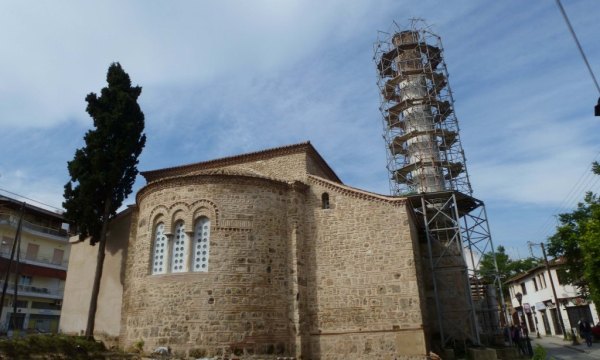
This paper seeks to illuminate the prevailing conditions in fourteenth-century Macedonia through a focused case study. While Veria is not an isolated example, it offers a particularly illustrative case, given that local historiography frequently debates the date of its conquest by the Ottomans, often without adequate consideration of the broader historical context.

The Origins of the Ancient Chaldaeans

In Classical Antiquity and Medieval Europe, the Chaldaeans became synonymous with astrologers. Indeed, they contributed significantly to the study of the stars and their perceived influence on the world and daily life. However, the Chaldaeans’ narrow characterization as astrologers has obscured their true identity.  This article aims to set the record straight: who were the Chaldaeans? Where did they come from? And what is their place in Mesopotamian history? 

Romeyka: The Modern Ancient Greek?

In north-eastern Turkey, in the coastal region known to the Greeks as Pontos (literally ‘sea’, cf. the adjacent Black Sea), the inhabitants of several villages, of mainly Turkish and Muslim identity, communicate by means of a Greek ‘dialect’: Romeyka (or Romayka). This article explores the sociolinguistic history of this Greek 'dialect' and how it differs from the rest of the Greek language.

The Kurds of the Caucasus

In this essay, Prof. Dr. Hakan Özoğlu details the policies and perspectives of the major imperial powers toward the Kurds in the Caucasus region around the time of World War I.

Hellenistic Alexandria

When Alexander founded in the Nile Delta one of his many Alexandrias in 331 BCE, he would have been overjoyed to know that this settlement would later become one of the cultural capitals of the ancient world—a city that still bears his name today. This location was not entirely unknown to the Greeks. In fact,... Continue Reading →

Blog at WordPress.com.

Up ↑