
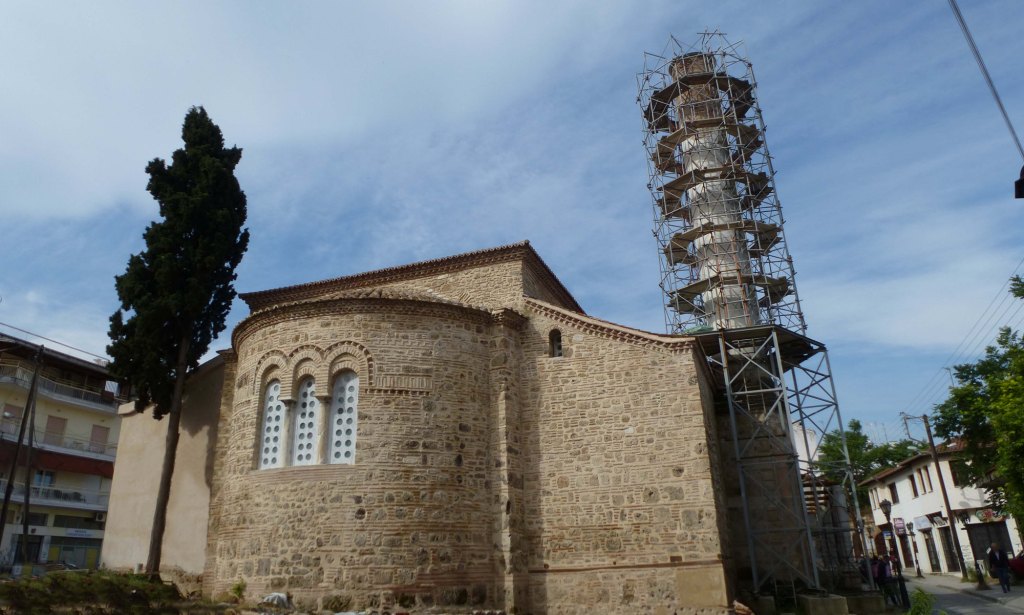
In the years leading up to 1352, a date many regard as marking the Ottoman passage from Asia into Europe, the Catalans, in alliance with the Ottomans, were engaged in military conflict against the Byzantines. Thrace and Macedonia served as the principal theaters of these clashes; however, Ottoman dominion was not yet firmly established. While the Ottomans began to make their initial moves toward consolidating power in the Balkans, they had not yet emerged as a dominant imperial force. At the same time, neither the Byzantines nor other Balkan powers retained sufficient strength to assert lasting control over the region.
This paper seeks to illuminate the prevailing conditions in fourteenth-century Macedonia through a focused case study. While Veria is not an isolated example, it offers a particularly illustrative case, given that local historiography frequently debates the date of its conquest by the Ottomans, often without adequate consideration of the broader historical context.
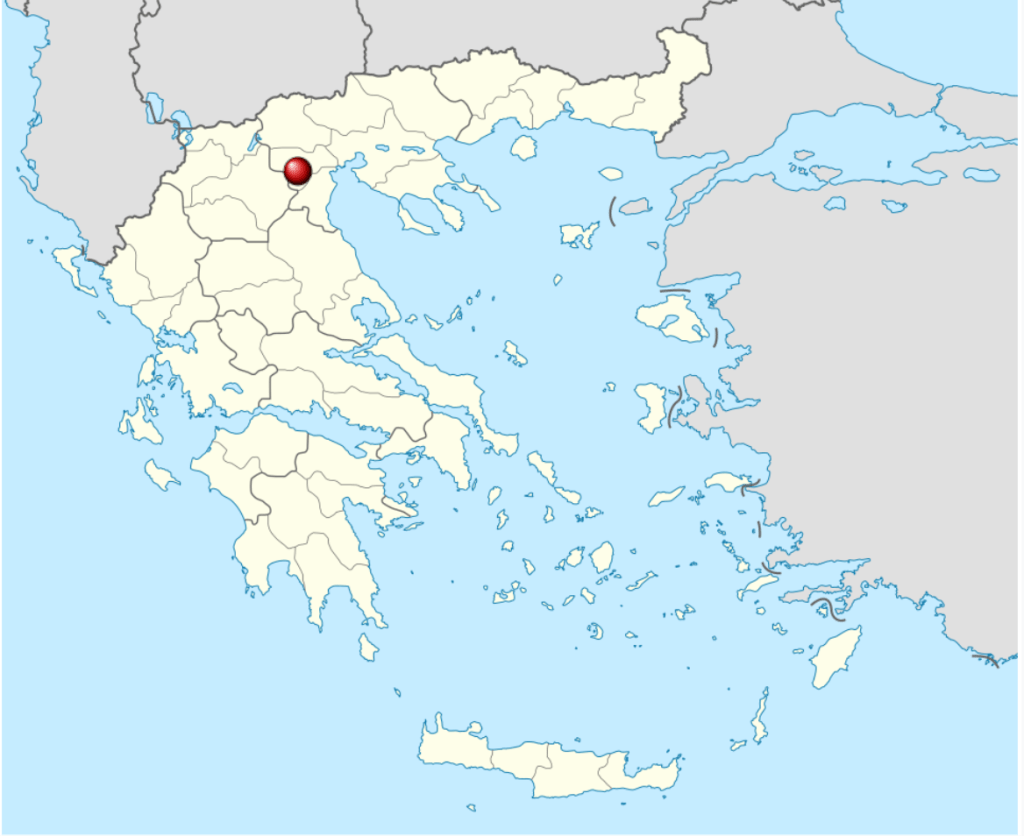
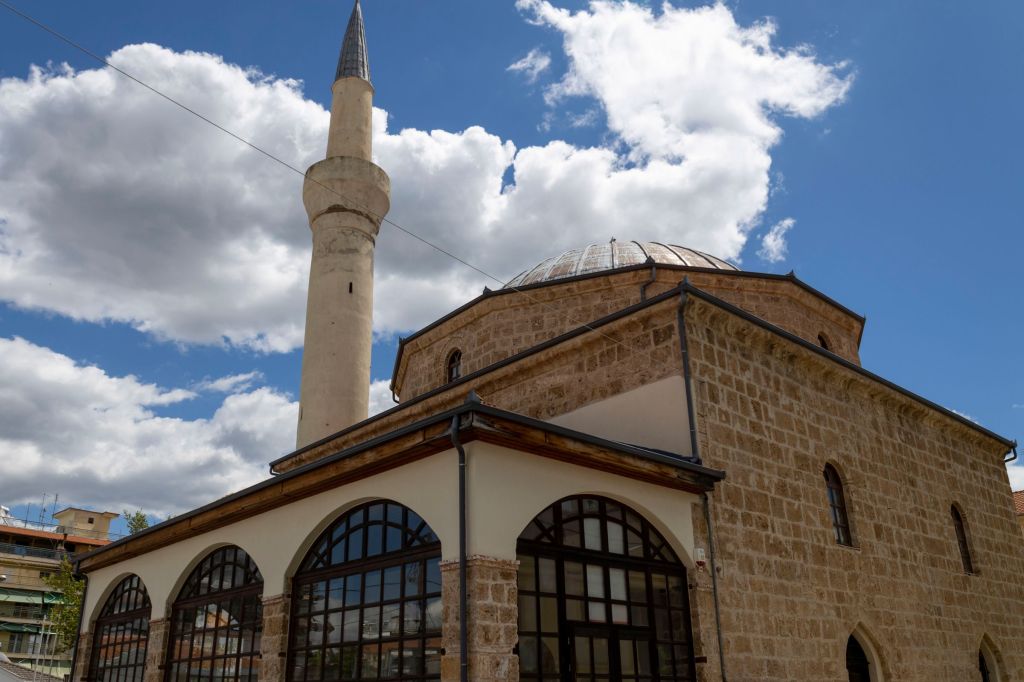
Veria remains relatively understudied, and thus, a brief introduction is necessary. It is a small city in Central Macedonia, located in close proximity to Thessaloniki. Veria was a city of considerable significance in both antiquity and the medieval period. The etymology of its name remains uncertain, and even its Ottoman-era name, Karaferye, has been the subject of scholarly disagreement. The traveler Evliya Çelebi offers one explanation: he claims the city was named after Kara Fere, the Ottoman warrior (ghazi) who captured it. However, it is important to note that Evliya visited Veria much later, in the seventeenth century. It is also worth mentioning that the city preserves a significant number of Ottoman records, particularly şer’iyye court registers, as well as numerous architectural monuments from the Ottoman period.
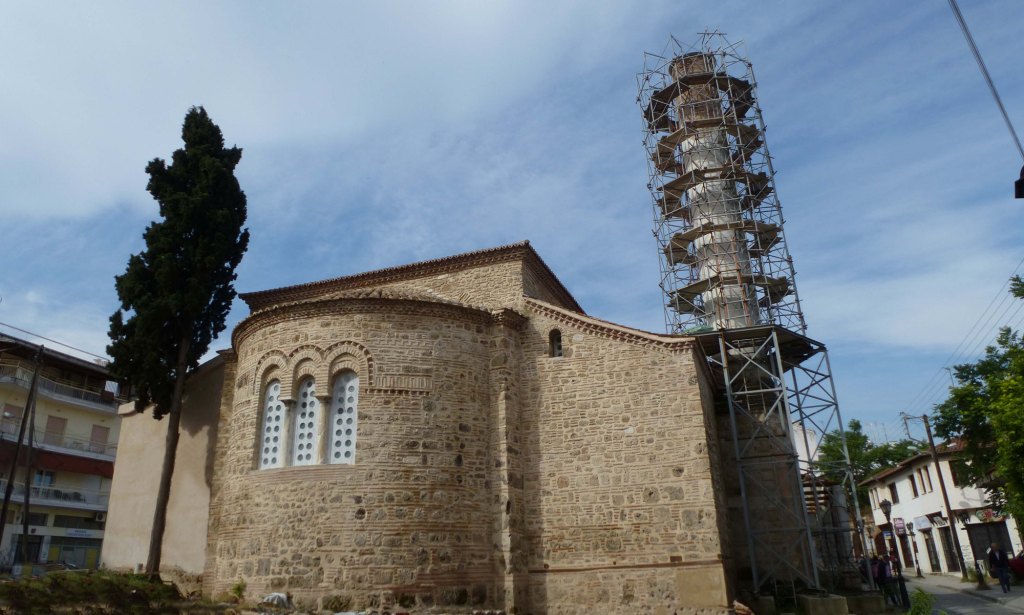
The Ottoman conquest of Veria remains a subject of scholarly debate, with no definitive date established due to the varied and often conflicting sources. Historical narratives, chronicles, inscriptions, and administrative documents suggest multiple periods during which the city may have changed hands, reflecting the broader power struggles between the declining Byzantine Empire and the expanding Ottoman state.
Evidence indicates that a Turkish presence in Veria existed as early as the 14th century. These early settlers were descendants of Izzeddin Kaikaus II, the former sultan of the western part of the Sultanate of Konya (1249–1259). Notably, they had converted to Christianity and were documented as residents of Veria in five manuscripts preserved in the 14th-century Vatopedi Monastery.
“Evidence indicates that a Turkish presence in Veria existed as early as the 14th century.”
The city’s control shifted multiple times during the 14th century. Around 1345 or 1346, it fell under the rule of Serbian Emperor Stefan Dušan, only to be reclaimed by the Byzantine general John VI Kantakouzenos in 1350. However, by 1355, Serbian forces had reoccupied Veria. From 1355 to 1372, the political status of the city remains unclear, though it is believed that Radoslav Hlapen, a Serbian commander, governed the region during this period. The city may have returned to Byzantine control between 1372 and 1386, as Emperor Manuel II Palaiologos, based in Thessaloniki, sought to restore influence in surrounding areas.
A significant milestone in Veria’s contested history is a military campaign described by the Ottoman chronicler Aşikpaşazade. According to his account, during the reign of Sultan Murad I (r. 1362-1389), Ottoman forces under the command of Hayreddin Paşa, Evrenos Bey, Deli Balaban, and Lala Şâhin advanced through Macedonia, eventually reaching and occupying Veria in 1385. If accurate, this would place Veria as one of the final cities captured in that campaign.
Nonetheless, other sources propose earlier or later dates. One theory suggests Veria was conquered in 1373 alongside Serres—a claim supported by the 17th-century historian Hacı Kalfa and traveler Evliya Çelebi, who references the Islamic year 774 (1372/3). Greek historical sources often favor 1385 or 1387 as the likely dates of Ottoman occupation.
Further complexity arises from the account of Yazicioğlu Ali, who states that Bayezid I reconquered Veria sometime during his reign between 1389 and 1402. At that time, the city was governed by Lyzakos, a Christianized descendant of Izzeddin Kaikaus II. Appointed by the Byzantines during a temporary recapture of the city, Lyzakos was later relocated to Zichna by the Ottomans, who granted him land after they retook Veria between Bayezid’s ascension in 1389 and the winter of 1393–94.
An alternative account places the (re)conquest of Veria in 1433, based on an inscription found in the church of Little St. George. The inscription reads: “† Ἐν ἒτει ςλμα’ ἐν μηνί ἀπριλ[ί]ου [ε]ἰς τες θ ἐπῆραν την Β[έ]ρροιαν,” which translates to “In the year 1433, in the month of April, on the 9th day, Veria was taken.” This piece of evidence, however, stands alone without supporting documentation.
A final theory suggests Veria fell to the Ottomans in 1448 or 1449. This argument is based on a 1599 court case in which Michael Charitopoulos presented a firman from 1449, in which the Sultan granted tax privileges to one of his ancestors in return for assistance during the city’s conquest. This implies either a loss and subsequent reconquest by the Ottomans or an act of betrayal facilitating the takeover—an event some historians, including Anastasopoulos, have examined in connection to the Charitopoulos family and the controversial figure Hatzikatvia.
In conclusion, the conquest of Veria cannot be pinned to a single, universally accepted date. The possibilities—1372/3, 1385/6, 1389–1393/4, 1433, and 1448/9—are based on scattered and sometimes contradictory sources. The uncertainty surrounding Veria’s fate underscores the fluid and often chaotic nature of power dynamics in the region during the late Byzantine and early Ottoman periods. Like many cities on the imperial frontier, Veria changed hands multiple times, ultimately becoming a permanent part of the Ottoman Empire by the mid-15th century.
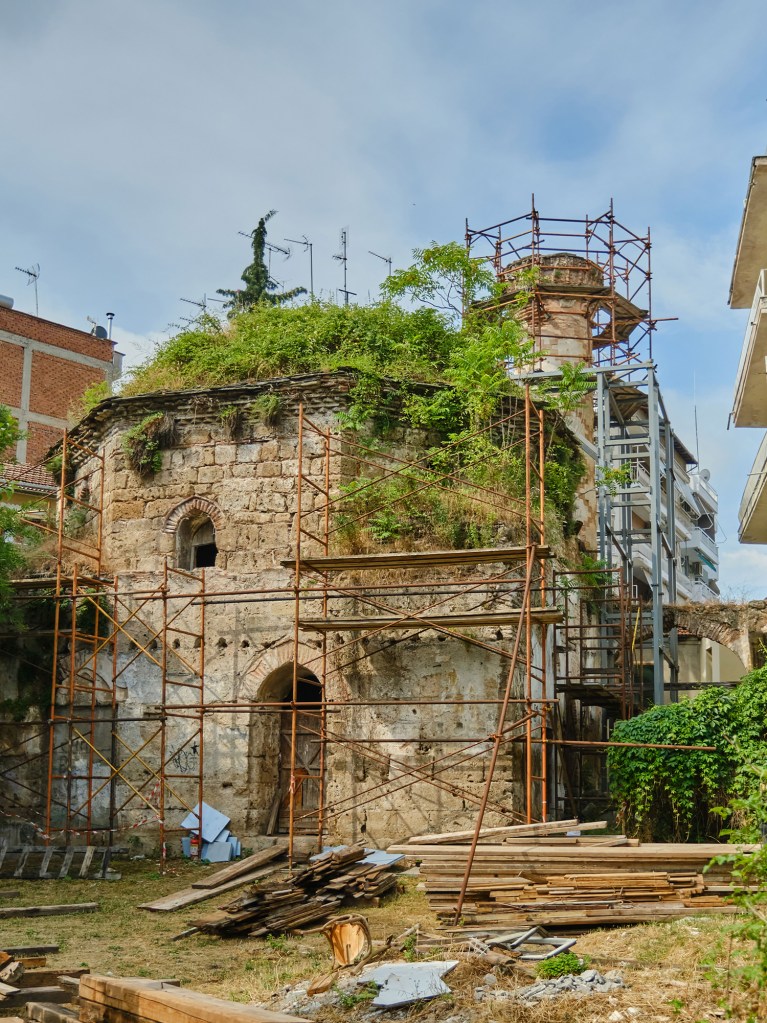
As previously noted, Veria is not a unique case; on the contrary, there are other cities—larger and more historically significant—that experienced similar fates. In his book The Early Ottoman City: Seven Cases from the Southern Balkans—Adrianople, Serres, Kastoria, Trikala, Larisa, Thessaloniki, Ioannina, Kotzageorgis presents, among other things, the chronology of the Ottoman conquest of these urban centers. For most of these cities, scholarly debate persists regarding the precise date of their capture. Therefore, neither the city’s importance nor its size appears to have determined the pace or timing of its integration into Ottoman rule.
What becomes evident is that Ottoman domination in the southern Balkans was established gradually, through successive military confrontations. The case of Veria should be understood within this broader context of widespread upheaval following the decline of the Byzantine state and the ensuing struggle among Byzantines, Ottomans, and other Balkan powers from the fourteenth to the late fifteenth century.
“In essence, just as Rome was not built in a day, neither was the Pax Ottomana established overnight.”
In essence, just as Rome was not built in a day, neither was the Pax Ottomana established overnight. It required the stabilization of the Ottoman dynasty in the fifteenth century, the administrative restructuring initiated under Murad I, and a concerted effort to conquer the Balkans, all of which culminated in the foundation of a state that gradually evolved into an empire.
Georgios Nathanail
Georgios Nathanail is a historian from Greece specializing in the history of the Ottoman Empire. His research focuses primarily on Ottoman society during the 18th and 19th centuries, with particular interest in themes of slavery, race, and politics. He is also engaged with various dimensions of local history, exploring how broader imperial dynamics intersect with regional and community-level experiences.
Sources:
- Α. Αναστασόπουλος, «Χατζηκατβίας, Χαριτόπουλος, Κριτόπουλος: στα ίχνη μιας παράδοσης για την οθωμανική άλωση της Βέροιας», 1453: Η άλωση της Κωνσταντινούπολης και η μετάβαση από τους μεσαιωνικούς στους νεώτερους χρόνους, ed. T. Κιουσοπούλου, Ηράκλειο, 2005, pp. 211‒225.
- B. Aydın & R. Günalan, Yunanistan Medreseleri, İstanbul, 2023.
- Β. Δημητριάδης, Η Κεντρική και Δυτική Μακεδονία κατά τον Εβλιγιά Τσελεμπή, Θεσσαλονίκη, 1973.
- Ε. Ζαχαριάδου, «Οι Χριστιανοί απόγονοι του Ιζζεδδίν Καϊκούς Β΄ στη Βέροια», Μακεδονικά, 1965, pp. 62‒74.
- D. A. Howard, Η ιστορία της Οθωμανικής αυτοκρατορίας, Αθήνα, 2019.
- Φ. Κοτζαγεώργης, Πρώιμη οθωμανική πόλη. 7 περιπτώσεις από τον νοτιοβαλκανικό χώρο: Αδριανούπολη – Σέρρες – Καστοριά – Τρίκαλα – Λάρισα – Θεσσαλονίκη – Ιωάννινα, Αθήνα, 2019.
- Θ. Παπαζώτος, «Εν έτει 1433 επήραν την Βέροιαν», Ιστορικογεωγραφικά, 1988, pp. 151‒154.
- Δ. Παπασταματίου & Φ. Κοτζαγεώργης, Ιστορία του νέου ελληνισμού κατά τη διάρκεια της οθωμανικής πολιτικής κυριαρχίας, Αθήνα, 2015.
- Κ. Σταθοπούλου-Ασδραχά, «Οι Τουρκικές Καταλήψεις της Βέροιας (14ος -15ος αι.) και τα προνόμια μιας χριστιανικής οικογένειας», Επιθεώρηση Τέχνης 1965, pp. 151‒157.
- A. Vacalopoulos, History of Macedonia 1354‒1833, Θεσσαλονίκη 1973.
- Γ. Χιονίδης, Ιστορία της Βέροιας, της πόλεως και της περιοχής Ι‒ΙΙ, Θεσσαλονίκη, 1960 & 1970.
- Γ. Χιονίδης, «Και πάλι για την άλωση της Βέροιας», Ιστορικογεωγραφικά, 1991, pp. 296‒299.


Leave a comment